The possible collapse of the AMOC explained in the press by Didier Swingedouw (EPOC Laboratory)

In recent days, several media outlets such as Le Monde, Libération, L’Express, TF1 info et Radio France have highlighted Didier Swingedouw’s work on the Atlantic Meridional Overturning Circulation (AMOC).
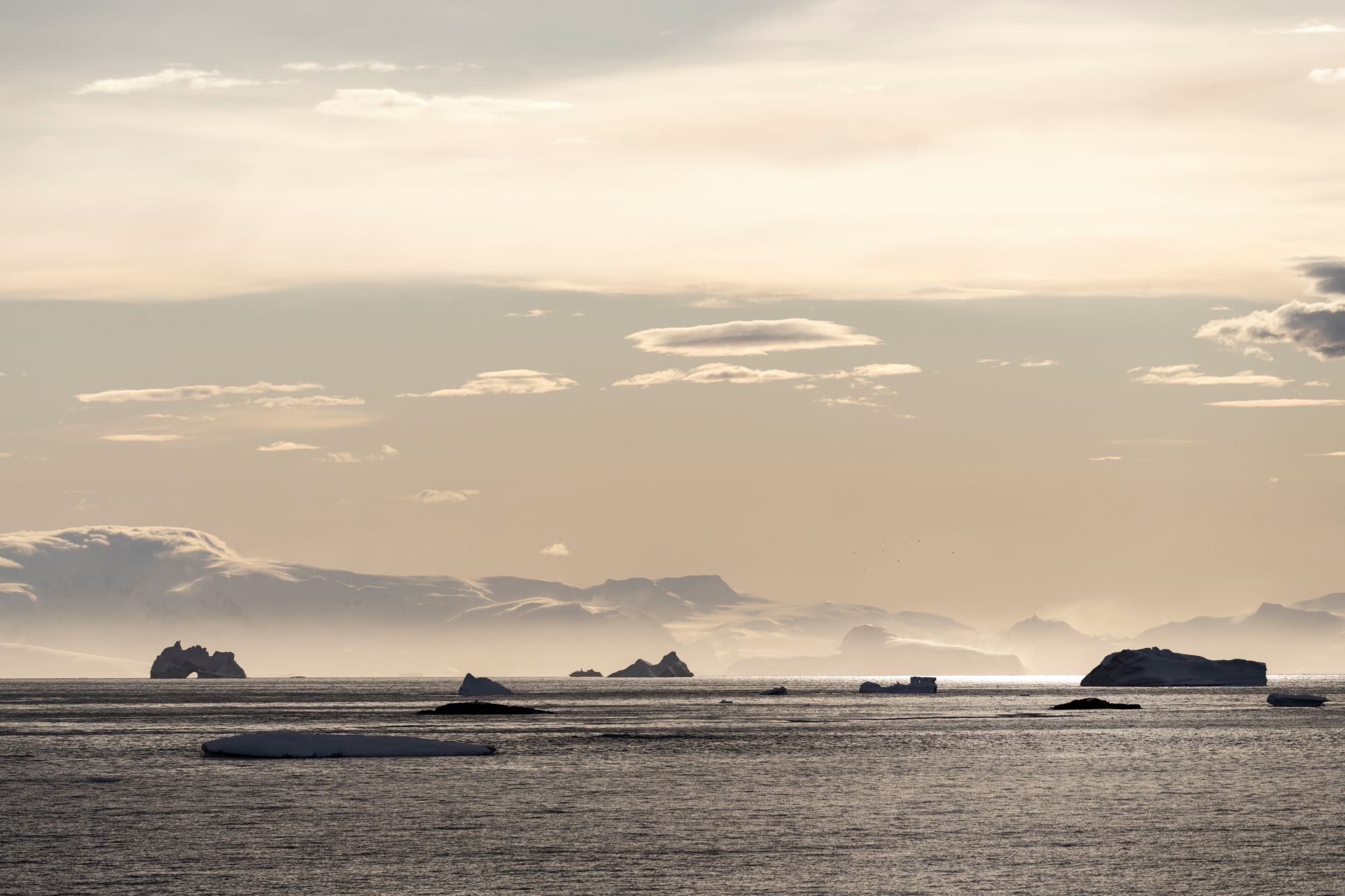
©Mission PALEO : Johan Etourneau

In these interviews, he discusses the importance of better anticipating the risks associated with this North Atlantic current system, which is essential to the European climate.

He explains that the AMOC influences major phenomena such as the monsoon in West Africa and is one of the determining factors in the climate of Northern and Western Europe. If this system slows down or collapses, Northern Europe could experience localised cooling. Models show that this is possible before 2100, perhaps as early as 2040, making research into these phenomena crucial.

Didier Swingedouw points out that it is essential to ‘do everything possible to avoid this phenomenon’ by limiting global warming in accordance with the Paris Agreements. But we must also study what would happen if it did occur.

‘The AMOC is not going to save us; in fact, it’s more of a problem, because it will add instability to a climate that we don’t yet know exactly how to adapt to,’ warns Didier Swingedouw.

The only solution to try to limit its effects is to drastically reduce our greenhouse gas emissions in order to limit the potential slowdown in ocean circulation and keep the rise in temperatures below the 2°C threshold set by the Paris Agreement.


Find the various articles:

Informations EPOC – january 2025

Related Articles

Lecture at ENSEGID by Professor Steven Loheide DARCY LECTURE 2026 on 16 March 2026

On Monday, 16 March 2026, at 2:00 p.m., ENSEGID (Bordeaux INP) will have the honour of welcoming the 2026 Darcy Lecturer, Professor Steven Loheide, a lecturer and researcher at the University of Wisconsin–Madison and an international expert in hydrology and...

PFAS, the eternal pollutants present in our waters – Le Parisien newspaper and Pierre Labadie

In this article, the newspaper Le Parisien interviews Pierre Labadie, who explains how PFAS accumulate in our water and the environment. He details the risks to health and biodiversity, and the importance of limiting our exposure to these substances.©Crédit photo :...

Press release – Ecosystem dynamics and cultural innovation during the Middle Stone Age in southern Africa

A new study published in Communications Earth & Environment highlights the work of Maria Sanchez Goni and Sara Garcia-Morato on the first subcontinental-scale reconstruction of ecosystem dynamics 180 and 30 millennia before present.©CNRSThis study provides a new...

Tap water and testosterone: AFP and Hélène Budzinski separate fact from fiction

Given the wealth of information circulating on social media, certain claims about the quality of tap water are causing concern. In particular, there is the idea that the presence of female hormones, oestrogens, could affect our health. What does the scientific data...

COASTAL RISKS | Vania Ruiz Gonzalez, project manager for the PSGAR CORALI and PEPR IRICOT research projects at the EPOC laboratory

Vania Ruiz Gonzalez explains her responsibilities within the PSGAR CORALI and PEPR IRICOT research projects. She discusses her work at the EPOC laboratory, the objectives of these projects, her role as Project Manager, and her career path.A video interview was...

Unusual visits organised by the CNRS return to the EPOC laboratory: ‘Marine sediments: a window onto the history of the Earth’ on 3 October 2025

The CNRS's Unusual Visits took place on 3 October at the EPOC Laboratory. This was a unique opportunity for participants to experience a real oceanographic campaign and unravel the geological and climatic mysteries of yesterday and tomorrow.The CNRS's Unusual Visits...

EPOC 2025 General Assembly: the laboratory organised Scientific and Technical Exchange Days at the Lycée de la Mer in Gujan-Mestras.

From 7 to 8 July 2025, the EPOC laboratory organised Scientific and Technical Exchange Days at the Lycée de la Mer in Gujan-Mestras.From 7 to 8 July 2025, the EPOC laboratory organised Scientific and Technical Exchange Days at the Lycée de la Mer in Gujan-Mestras....

The Emergent’Sea report provides an overview of chemical contamination along the French coastline.

Researchers from the EPOC Laboratory and Ifremer have published the Emergent'Sea report online, demonstrating the extent of this contamination, which affects the entire water cycle.©Laboratoire EPOCObjective: to investigate the presence of pesticides and...

A look back at the OneWater PEPR Scientific Days (26 to 28 August 2025)

The second edition of OneWater Days – Water as a Common Good* was held at the University of Bordeaux from 26 to 28 August 2025. Co-organised with the EPOC laboratory, the event brought together more than 200 participants from the French water science community, local...

OASU Interlude ‘A global study of hidden diversity reveals the large-scale impact of human activities on biodiversity’ by Richard Michalet (EPOC)

On 15 July 2025, Richard Michalet gave a talk entitled ‘A global study of hidden diversity reveals the large-scale impact of human activities on biodiversity’ as part of the Intermèdes series organised by OASU.Summary: A global initiative shows that, by studying total...