
Tap water and testosterone: AFP and Hélène Budzinski separate fact from fiction


Given the wealth of information circulating on social media, certain claims about the quality of tap water are causing concern. In particular, there is the idea that the presence of female hormones, oestrogens, could affect our health. What does the scientific data actually say?
©Adobe : AdobeStock_333919000

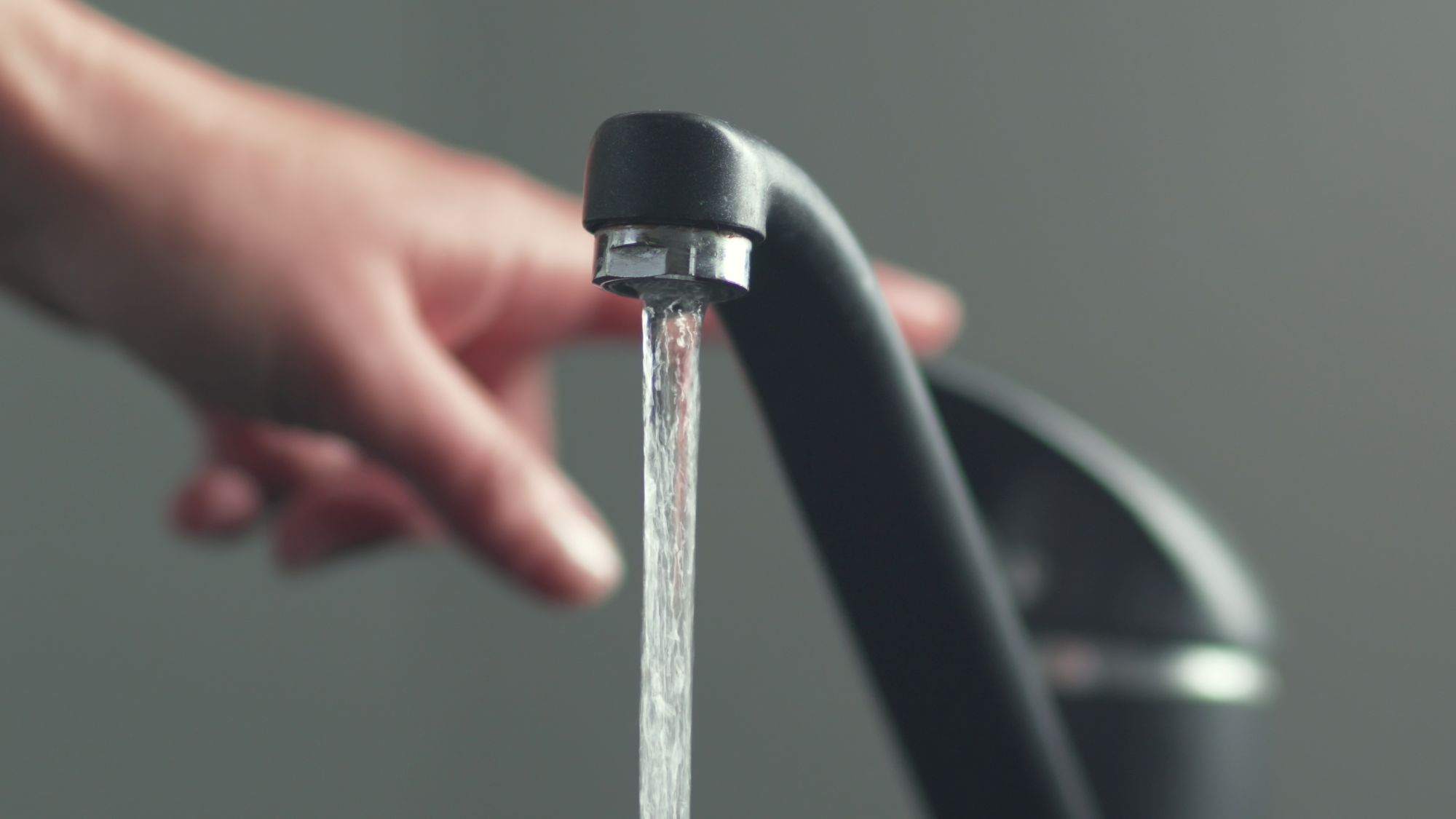
Tap water is regularly the subject of debate, particularly on social media. Recently, many internet users and influencers have been calling on men to stop drinking tap water, claiming that it contains female hormones, oestrogens, which they say can ‘disrupt men’s natural testosterone’.

These claims are based on a misunderstanding of the drinking water treatment process. While traces of drug or hormone residues may be present in wastewater, it undergoes numerous treatment and filtration stages before being consumed.

‘In France, as in all industrialised countries, water treatment plants are designed to effectively remove this type of molecule. Oestrogens are thus degraded by 99% thanks to the physico-chemical and biological processes used.’ – Hélène Budzinski, director of the EPOC laboratory, on TF1 Info.

‘When you add up all these degradation stages, it is highly unlikely that there are significant quantities, or even any quantities at all, of oestrogens in tap water.’ – Hélène Budzinski, director of the EPOC laboratory, speaking to AFP.

These facts serve as a reminder that drinking water distributed in France meets strict health standards and is subject to regular checks. In the face of anxiety-provoking information circulating online, scientific research remains an essential source for distinguishing facts from misconceptions.


For more information: https://factuel.afp.com/doc.afp.com.93CY3WE


Informations EPOC – february 2026

Related articles

Emmanuelle Ducassou has been appointed coordinator of the European MSCA – C-BRINES project, ‘Global climate impacts of extreme brine input to the ocean’

The EPOC laboratory is involved in a new European project coordinated by Emmanuelle Ducassou. The C-BRINES project (“Global climate impacts of extreme brine input to the ocean”) has been selected under the Marie Skłodowska-Curie Doctoral Networks scheme, a highly...

Career profile: an interview with Alexis Bonnet, Mechanical Production Technician at the laboratory.

Having joined the Arcachon Marine Station in November 2025, Alexis Bonnet ensures the smooth running of the technical facilities essential to the research carried out at EPOC. Between maintenance, adapting to new requirements and dealing with the unexpected, he tells...

Pint of Science event in Bordeaux! Three members of the EPOC laboratory will be sharing their research on 18 and 19 May!

From 18 to 19 May 2026, the Pint of Science event is making a comeback in Bordeaux. To mark the occasion, three members of the EPOC laboratory will be meeting the general public to share their research in a friendly and accessible setting.©EPOCThe Pint of Science...

My thesis in 180 seconds, Joanne Couallier, finalist from the University of Bordeaux

The challenge of this competition is to explain your research topic in just three minutes! A challenge that Joanne Couallier, a PhD student in climatology at the EPOC Laboratory, has taken up.©Kéwann MoreauOn 2 April 2026, the University of Bordeaux hosted the final...

EPOC Laboratory General Assembly 2026: a day of review and discussion at the Domaine du Haut Carré at the University of Bordeaux

The EPOC laboratory met on 30 January 2026 for its General Assembly, held at the Domaine du Haut Carré and hosted by the University of Bordeaux.©Kéwann MoreauThe day provided an opportunity to review the actions carried out in 2025 and share future prospects....

Lecture at ENSEGID by Professor Steven Loheide DARCY LECTURE 2026 on 16 March 2026

On Monday, 16 March 2026, at 2:00 p.m., ENSEGID (Bordeaux INP) will have the honour of welcoming the 2026 Darcy Lecturer, Professor Steven Loheide, a lecturer and researcher at the University of Wisconsin–Madison and an international expert in hydrology and...

PFAS, the eternal pollutants present in our waters – Le Parisien newspaper and Pierre Labadie

In this article, the newspaper Le Parisien interviews Pierre Labadie, who explains how PFAS accumulate in our water and the environment. He details the risks to health and biodiversity, and the importance of limiting our exposure to these substances.©Crédit photo :...

Press release – Ecosystem dynamics and cultural innovation during the Middle Stone Age in southern Africa

A new study published in Communications Earth & Environment highlights the work of Maria Sanchez Goni and Sara Garcia-Morato on the first subcontinental-scale reconstruction of ecosystem dynamics 180 and 30 millennia before present.©CNRSThis study provides a new...

COASTAL RISKS | Vania Ruiz Gonzalez, project manager for the PSGAR CORALI and PEPR IRICOT research projects at the EPOC laboratory

Vania Ruiz Gonzalez explains her responsibilities within the PSGAR CORALI and PEPR IRICOT research projects. She discusses her work at the EPOC laboratory, the objectives of these projects, her role as Project Manager, and her career path.A video interview was...

Unusual visits organised by the CNRS return to the EPOC laboratory: ‘Marine sediments: a window onto the history of the Earth’ on 3 October 2025

The CNRS's Unusual Visits took place on 3 October at the EPOC Laboratory. This was a unique opportunity for participants to experience a real oceanographic campaign and unravel the geological and climatic mysteries of yesterday and tomorrow.The CNRS's Unusual Visits...