
The 2022 edition of the Fête de la Science welcomed nearly 2,500 people to the Climate and Biodiversity Village at Cap Sciences on Saturday 15 and Sunday 16 October. A total of 50 partners (laboratories, institutes, universities, schools, associations, artists, etc.) supported the event with 25 animation stands (including 3 for EPOC), 9 workshops, 9 conferences, 4 exhibitions and 5 escape games / serious games.
Climate odyssey:
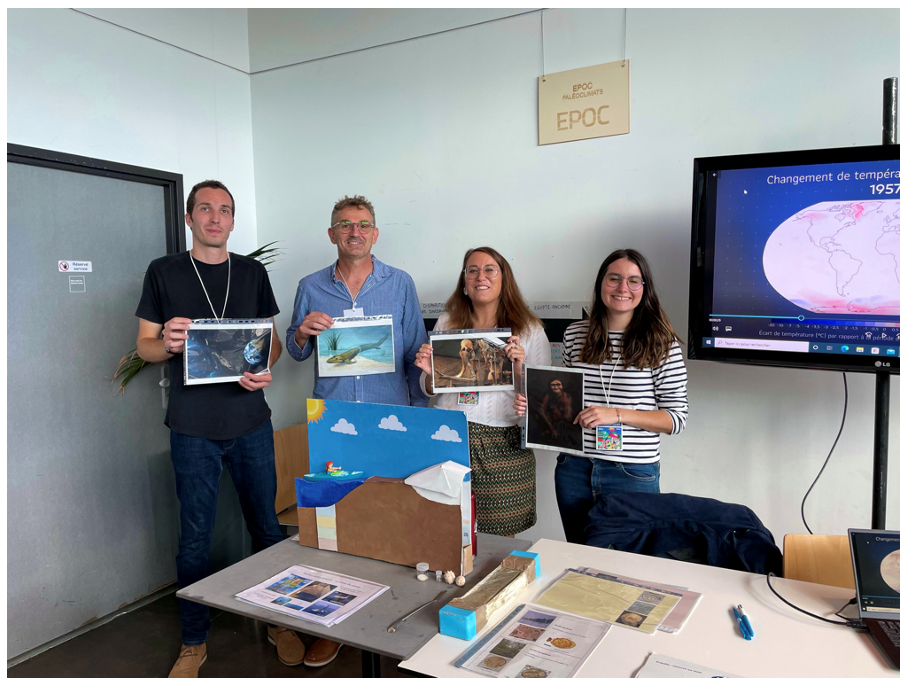
Visitors were able to find out more about palaeoclimatology and discuss climate change through a number of workshops focusing on the study of marine sediment cores and their proxies, as well as climate modelling. More specifically, the stand manned by members of the PALEO team, including Ludovic Devaux, Thomas Extier, Tiffanie Fourcade and Coralie Zorzi, consisted of : (1) a timeline showing major events from the Big Bang to the present day, scaled down to one year to raise awareness of the concept of geological age; (2) a model of the Earth system showing the components of the climate machine. This was used to introduce the concept of the climate archive and climate feedback processes; (3) a sediment core and its microfossil and detrital elements (foraminifera, IRD and pollen grains in paste form); (4) an exercise in identifying microfossil assemblages with the help of an atlas to reconstruct oceanic and terrestrial (and therefore climatic) variations over four periods of time; (5) a climate simulation to raise awareness of the change in average temperature from 1800 to 2100; (6) an introduction to climate models using SimClimat educational software; (7) an arrow-word grid (to take away or do on the spot) summarising the concepts presented in the other workshops.
Micropollutants: all on show?
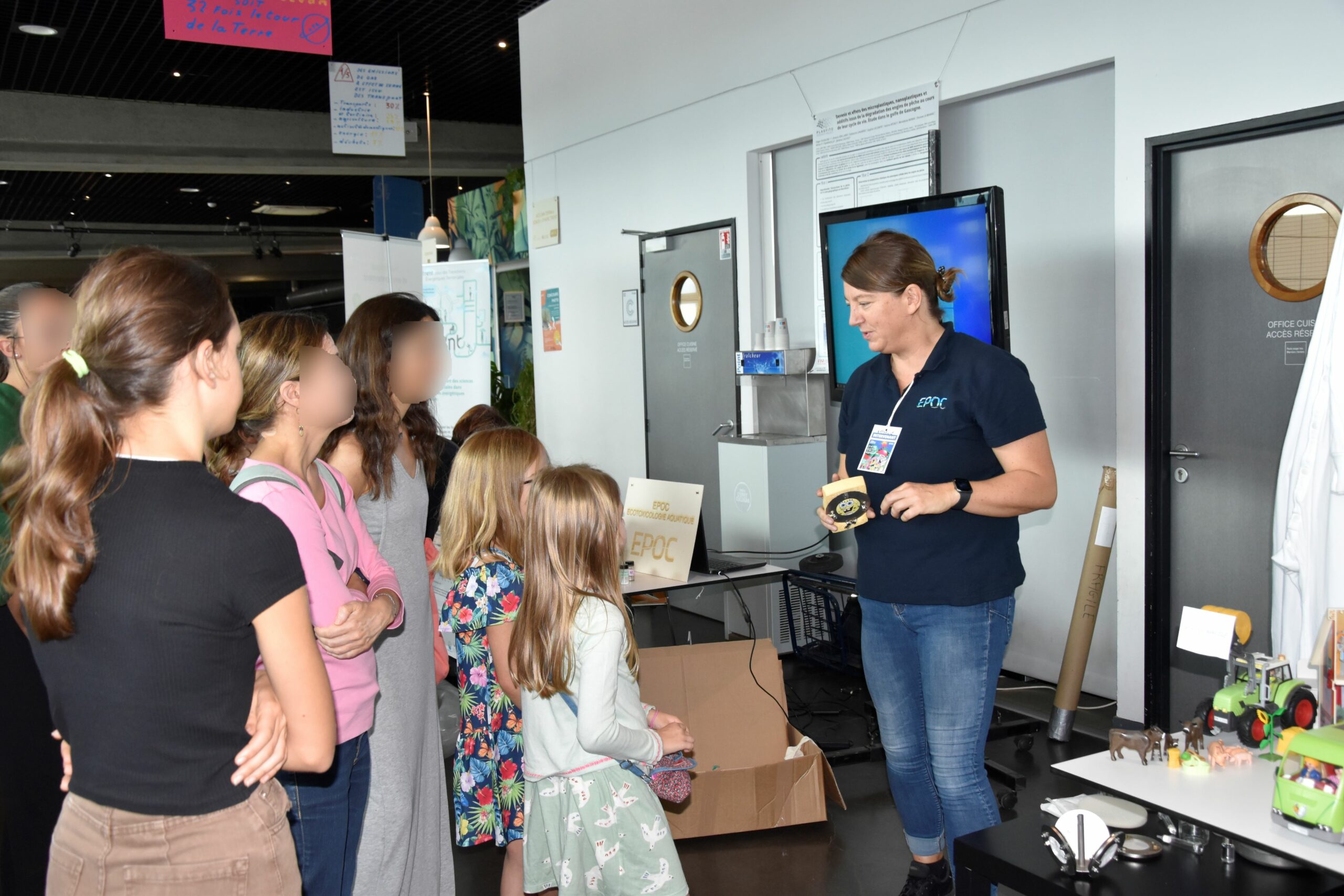
The LPTC team took the opportunity to present a stand focusing on organic micropollutants. The event provided an opportunity to discuss the issue of exposure to these compounds with the large, young audience.
Plastic pollution: how do you recognise fishing gear washed up on beaches?
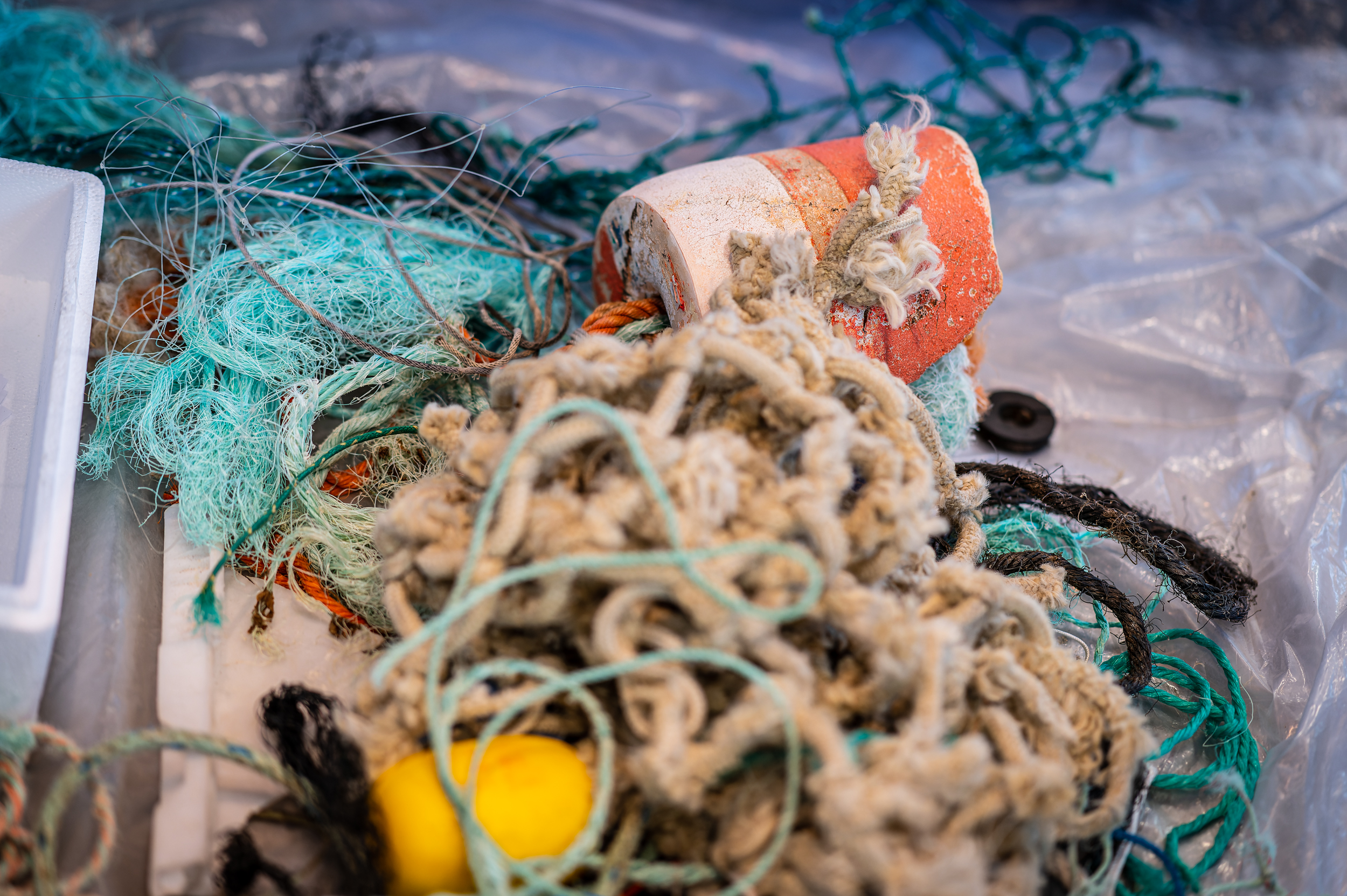
Microplastic pollution is a real problem, but one that is still poorly understood. The UMR EPOC’s Aquatic Ecotoxicology research team was able to explain this pollution through fun workshops on how to identify microplastics and their potential sources.
The PLASFITO research project, which focuses on the fishing industry, was presented, and was a big hit with families, particularly thanks to the identification key for different fishing gear.
The results of the ARPLASTIC project on microplastic pollution in the Bay of Arcachon were also very much appreciated by the public at large, as they are very much rooted in the Gironde region.
EPOC information – October 2022