Valérie Langlois, expert in eco-toxicogenomics, Canada Research Chair and Fellow of the Royal Society of Canada, answers our questions.
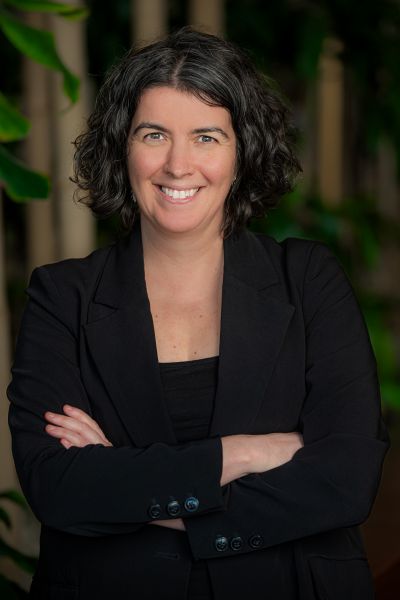
©Valérie Langlois 2024
Can you introduce yourself?
I’m Valérie Langlois, an expert in ecotoxicogenomics, holder of a Canada Research Chair and member of the College of the Royal Society of Canada. I co-chair Health Canada’s Independent Scientific Advisory Committee on Pesticides, so I’m at the forefront of changes to pesticide regulation in Canada. I chair NASCE (North American Society for Comparative Endocrinology) and lead a pan-Canadian project on eDNA and neRNA, having established the first international standard for eDNA analysis using real-time PCR (qPCR) technology. As an author of children’s books on raising public awareness of various environmental issues, I have published over 95 scientific articles and supervise numerous PhD students.
Can you tell us about your research and its aims?
Every year, a million tonnes of plastic end up in the oceans, generating microplastics and nanoplastics with worrying environmental and health impacts. My project aims to develop a non-invasive method based on environmental RNA (eRNA) to assess the toxicity of nanoplastics on bivalves and their health.
The scientific objectives are as follows
- to assess plastic pollution from sea salt on the Ile de Ré,
- characterise the mechanisms of action of nanoplastics extracted from sea salt on filter-feeding bivalves by studying the classic suite of biomarkers developed by the team,
- determine the impact of the temperature/nanoplastic relationship on oyster health,
- develop a new criterion for assessing the health of bivalves,
- compare the toxicity of nanoplastics extracted from sea salt with commercial and biosourced polymer nanoplastics on the physiology of filter-feeding bivalves.
What concrete results or impacts do you hope to achieve with your research, in the short and long term?
In the short term, this project will enable us to train a student in molecular ecology and ecotoxicology as part of a bidiploma programme between INRS and the University of Bordeaux. In the long term, this research project aims to inform salt producers about the levels of nanoplastics associated with harvested sea salt. The results will be disseminated to civil society and local players such as the Arcachon Basin Marine Park, the Regional Shellfish Section, the Adour-Garonne Water Agency and the Arcachon Basin Intercommunal Syndicate, etc.
What motivated you to work with the EPOC laboratory and how has it enriched your work?
The collaboration with the EPOC laboratory was motivated by the expertise of Professor Magalie Baudrimont, a specialist in the toxic impact of nanoparticles on aquatic organisms. This collaboration has enriched my research into plastic pollution and its effects on biodiversity.
Information January 2025 – EPOC