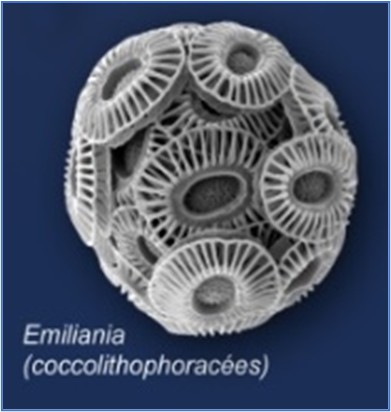
Introducing the team :
Managers : Frédérique Eynaud and Didier Swingedouw
Members of the PALEO research team focus their studies on the reconstruction of climate variations and dynamics form tropical to polar regions, and with regards to what climate changes imply for socio-ecosystems. The main objective is to characterize and model the climate dynamics at various time scales (seasonal to multi-millennial in the past) in order to better understand what is going on at present and anticipate future changes.
Research areas and themes

AXIS 1: Climate dynamics
Coordinator : Thibaut Caley
The objective of this axis is to improve our understanding of past climate dynamics and to assess the implications for present and future climate. The reconstruction of hydroclimatic metrics at high-reolution in time, ranging from the season to the decade, in palaeoclimatic archives is complemented by numerical modelling approaches in order to improve future projections (e.g. through observationnal constraints approach).
AXIS 2: Biosphere, biogeochemical cycles and climate
Coordinator : Johan Etourneau
Members of the second structuring axis aim at providing a better understanding of the major biogeochemical cycles involved in climate variability, espacially thanks to an approach which crosses existing knowledges on living organisms and on interactions between biotic/abiotic reservoirs at different scales of time and space.


AXIS 3: Societies, ecosystems and climate
Coordinator : Anne-Laure Daniau
This axis of research focuses on understanding the links between climate change and human societies. The evolution of populations and territories is examined at long-term timescales, in parallel with climate variabilities, in order to identify the major forcings at play on the adaptability, resilience or collapse of past societies.
The core question of this theme is : ‘What is the link between climate, environments and human settlement trajectories ?
Equipments / Resources
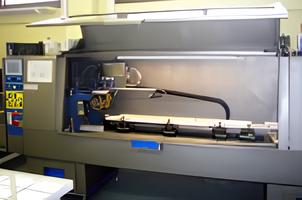
XRF Core Scanner
The team explore past climate changes and environmental variabilities thanks to a large set of tools using (fossil) bioindicators and geochemical tracers. Palaeoclimatic recordsand variabless are reconstructed from various archives in many regions of the globe.

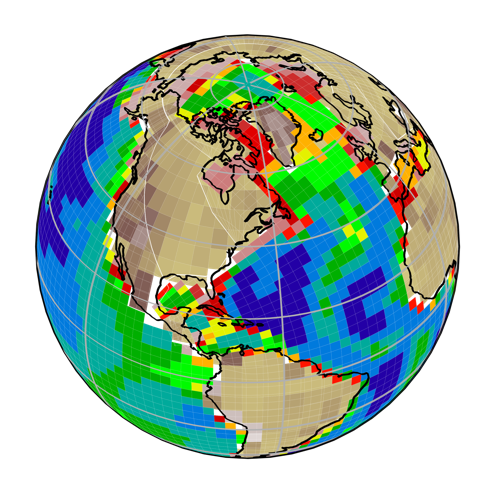
Digital climate models
The team develops and uses sophisticated numerical climate models. These models make it possible to attribute the mechanisms that explain past, present and future climate change. They can also be coupled with palaeoclimatic reconstructions, via data assimilation methods, to provide reconstructions of past and recent climates that are more extensive spatially and temporally than just where observations have been collected. These approaches will improve our understanding of climate dynamics.
Finally, the team contributes to and relies on several of the EPOC laboratory’s platforms, such as PAACS, Isotopie, Biodiversity and M&Ms. This interaction between the team and these platforms is at the heart of the team’s data production.