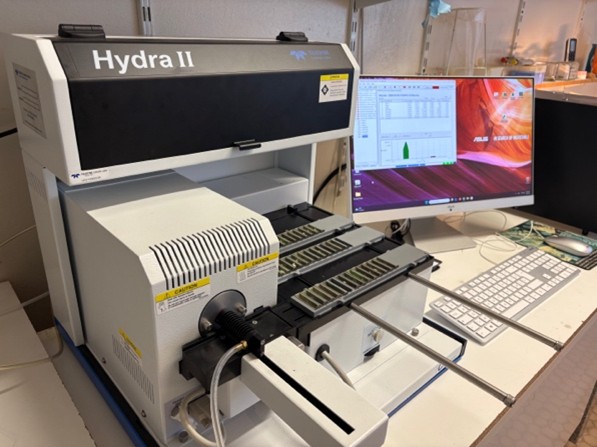
Plateform M&Ms
Based in both Pessac and Arcachon, M&Ms is a platform that pools the sample preparation systems and high-tech analytical equipment used by the Aquatic Ecotoxicology (EA), Geochemical Metal Transfer at the Continent-Ocean Interface (TGM) and Palaeoclimates (PALEO) teams at the EPOC laboratory. The platform provides support and technical expertise for the quantification of conventional and emerging metals and metalloids in various matrices: sediments, soils, water, biological tissues and carbonates. It draws on methodological and analytical developments specifically adapted to the matrices and concentration levels targeted (major or trace) and developed within the research teams. It interacts in projects with other scientific teams at the EPOC joint research unit. It provides services to external public and private partners at regional, national and international level. The M&Ms analytical platform is certified by the University of Bordeaux Platform Federation (FED) and has been integrated into the CNRS’s RéGEF (French Geochemical and Experimental Network) research infrastructure.

Responsables
Scientific manager
Alexandra Coynel
Technical managers
Cécile Bossy
Émilie Dassié
Applications / Expertise

Assays of metals and metalloids, classical and emerging, in various matrices:
– natural waters and effluents (fresh, brackish, discharges, leachates…);
– mineral and sedimentary matrices (sediments, soils, rocks, limestone concretions…);
– biological matrices (algae, plants, crustaceans, bivalves, fish…);
– Particles and materials of anthropogenic origin (electronic components, urban particles, abrasion products…).
Instruments
Analytical Centre and Instruments
The M&Ms platform is divided into 3 analytical units based on the optimization and validation of analytical procedures for the quantification of metals/metalloids in various matrices:
– ” Mass spectrometry pole (ICP-MS) “
– ” Electrochemistry / voltammetry pole “
– ” Atomic emission and absorption spectrometry pole (ICP-OES and AAS)”
and a set of small equipment grouped under the term “Sample preparation center”.
Mass Spectrometry Unit (ICP-MS):
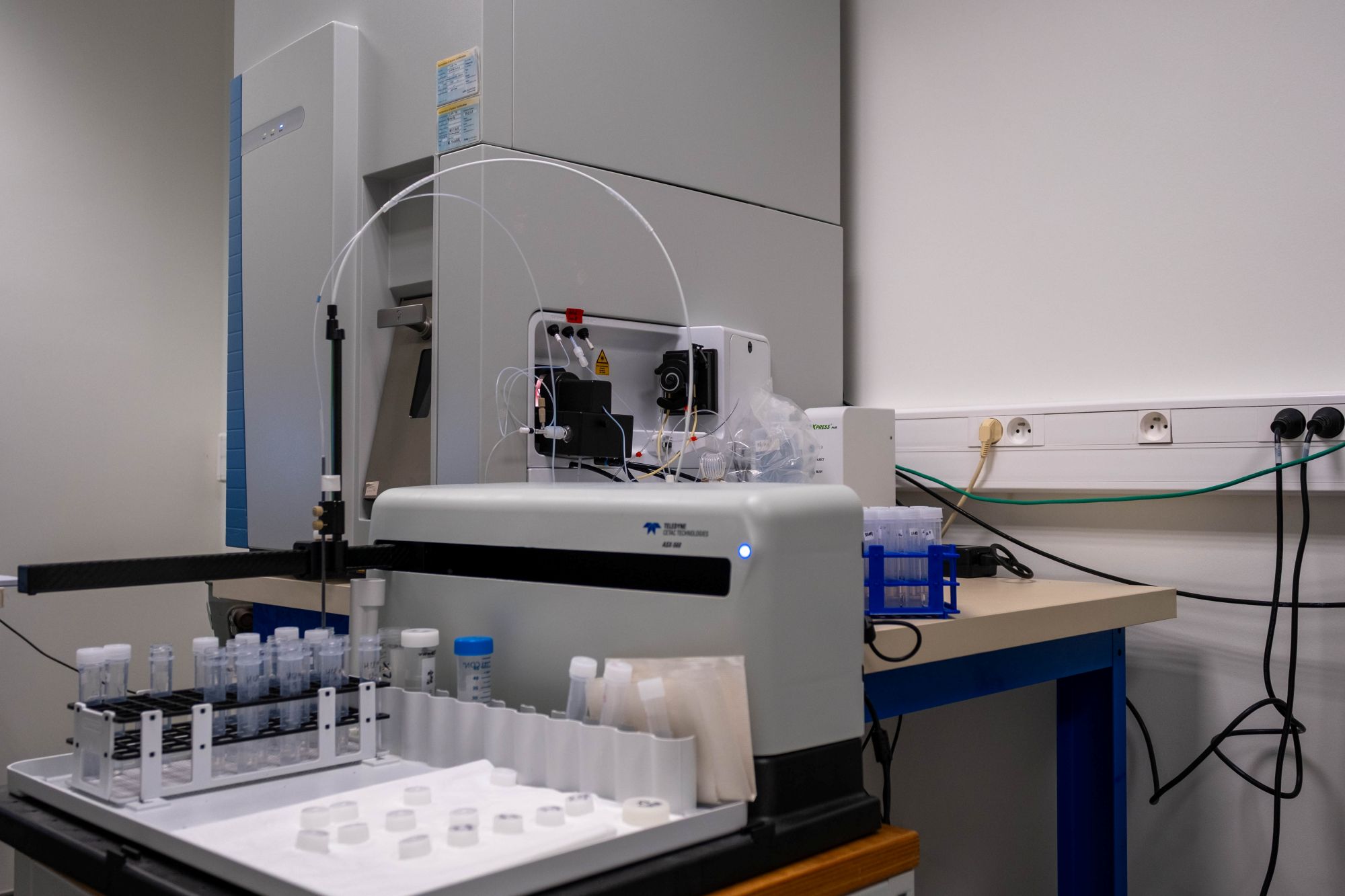
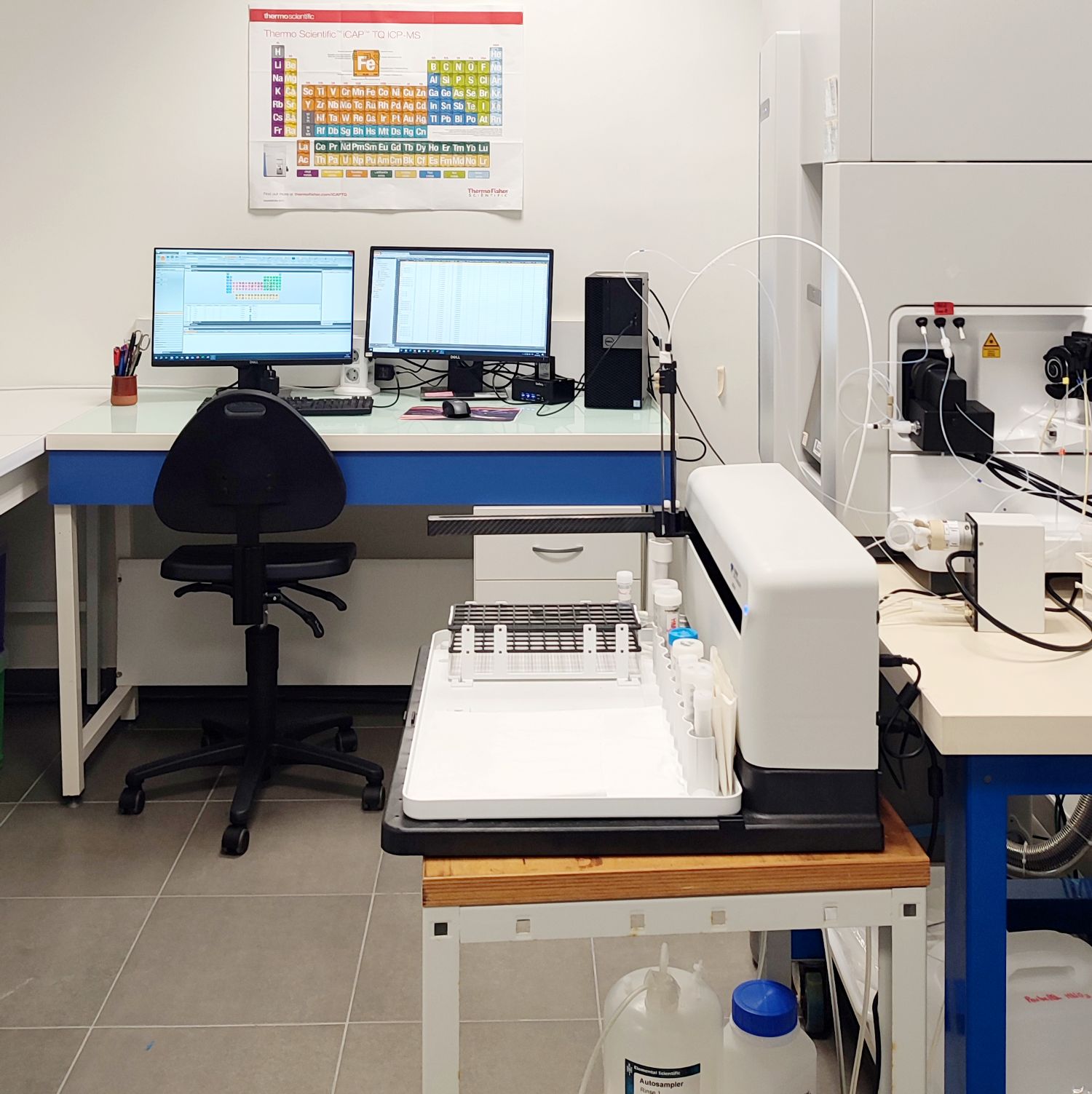
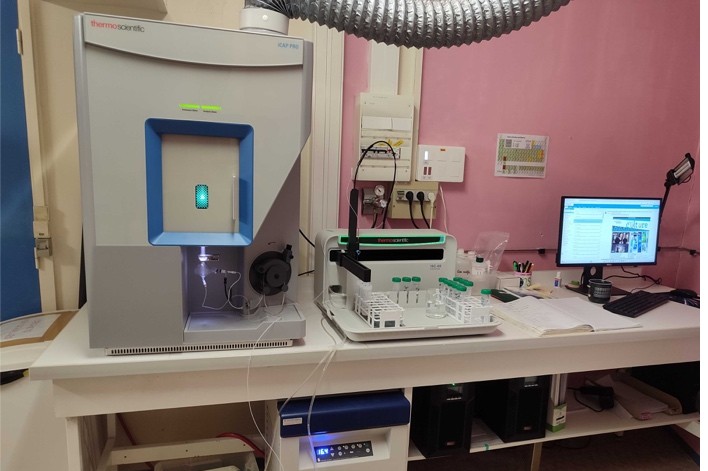
The centre comprises three triple quadrupole ICP-MS (TQ iCAP Thermo®) instruments and their couplings for quantifying trace metal elements (TMEs) at trace (<µg/l) or ultra-trace (<ng/l) levels for conventional elements (e.g. Cd, Cu, Zn, Ag) or emerging elements (e.g. rare earths or platinoids).
Contact : Cécile Bossy and Alexandra Coynel
a. Measurement of trace and ultra-trace metals/metalloids TQ-ICP-MS(#1)
ICP-MS is particularly well suited to measuring heavy metals due to its high sensitivity, low detection limits and ability to analyse several elements simultaneously. ICP-MS#1 aims to meet analytical demands concerning solid matrices (sediments, soils, sludge) or low-load matrix waters (e.g. river water, drinking water).
Contact: Cécile Bossy and Laureline Labadie
Staff involved: Nicolas Layglon, Laurie Payet and Alexandra Coynel
b. SeaFast-TQ-ICP-MS coupling (#2)
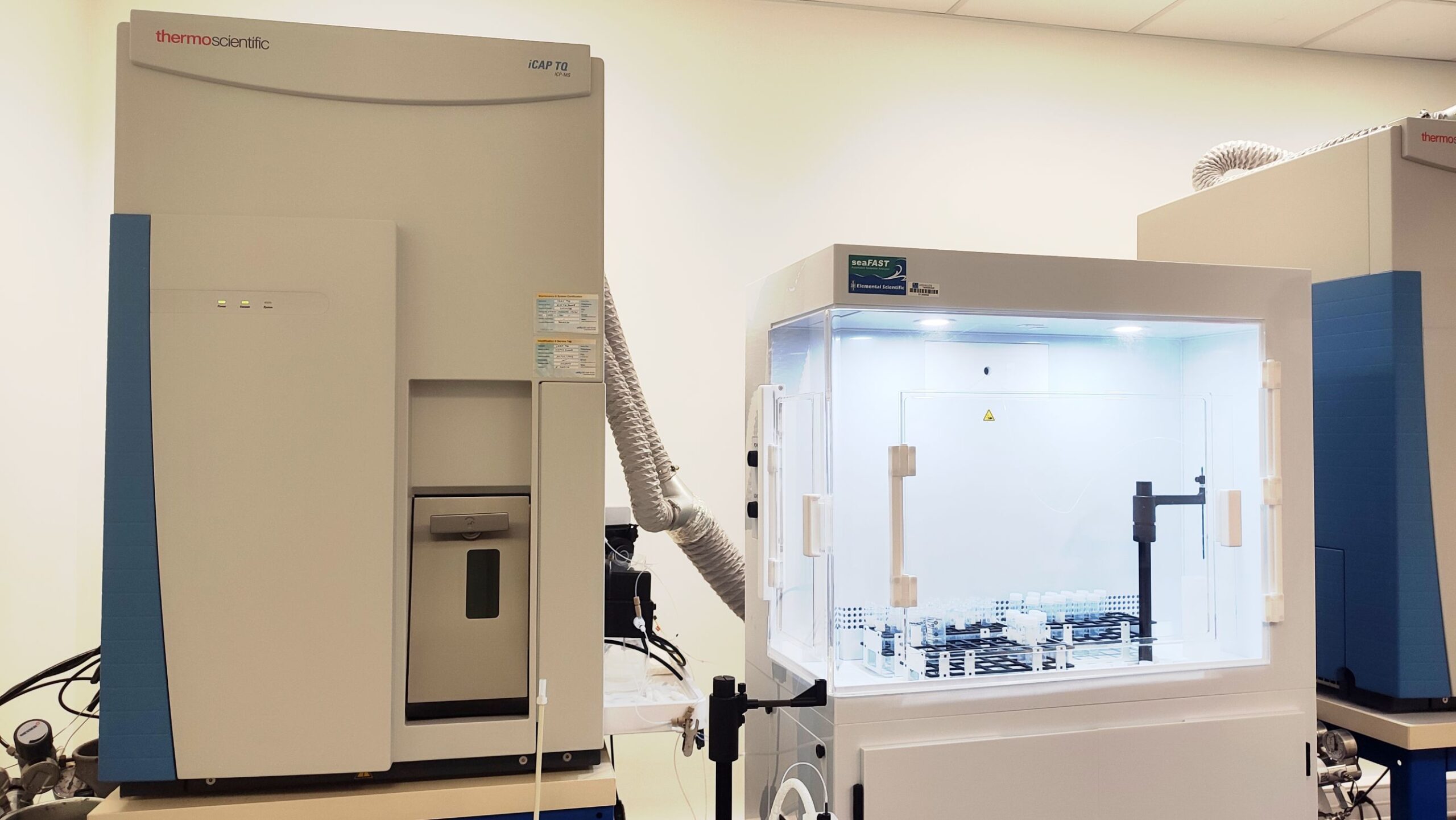
SeaFast® (ESI) is an automated sample introduction system, fully Teflon-coated and automatic, offering increased sensitivity and reduced handling time. It is designed for:
– Pre-concentration of samples on chelating resin, in ‘on-line’ or ‘off-line’ mode
– Elimination of non-spectral interference associated with loaded matrices (e.g. seawater, wastewater).
Coupled with TQ-ICP-MS#2, it enables the measurement of:
– ETMs in water with elimination of the salt matrix
– ETMs in biological matrices with elimination of interferents
Contact: Cécile Bossy and Nicolas Layglon
ESI®
c. Hydride generator coupling-TQ-ICP-MS(#3)
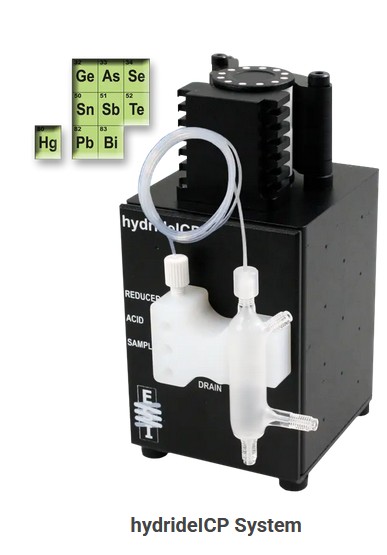
The use of a hydride generator (ESI®) promotes the separation of the analyte from the matrix and increases analytical sensitivity for elements that form volatile hydrides (e.g. As, Sb and Se). Coupled with TQ-CP-MS#3, it allows the speciation of As (AsIII and AsV) to be characterised and Sb and Se to be measured.
Contact: Cécile Bossy
Electrochemistry/Voltammetry Division
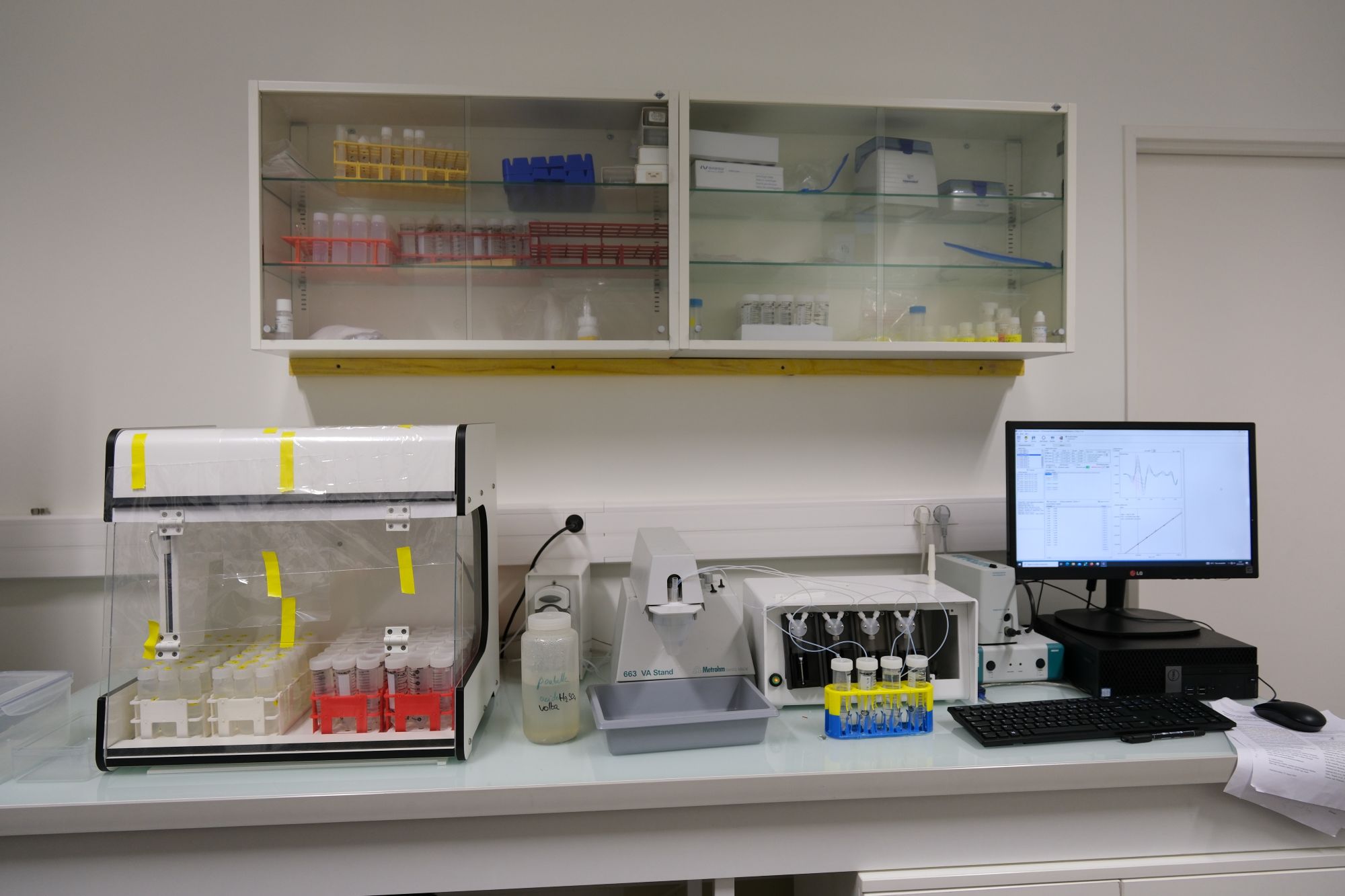
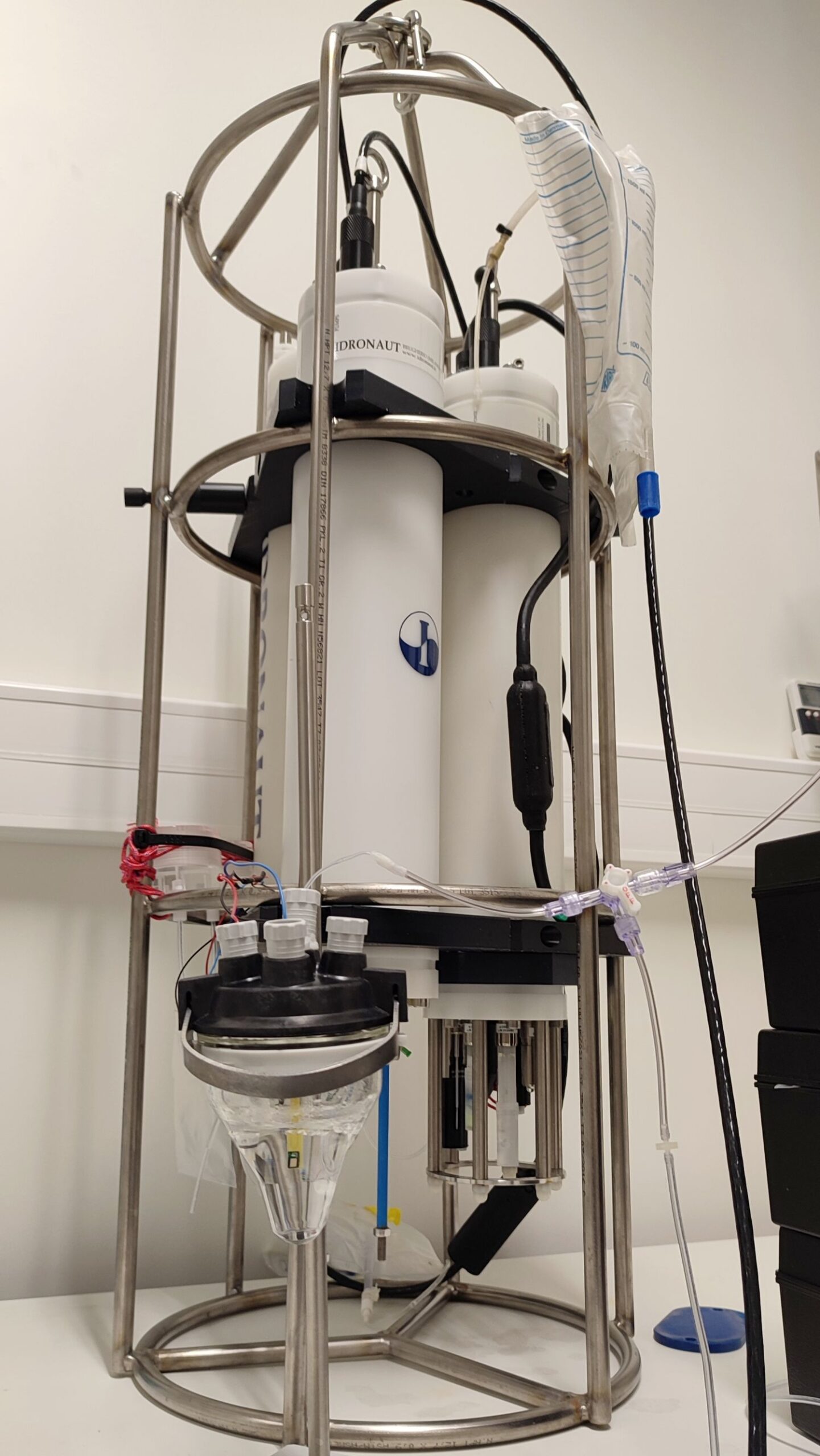
The centre consists of a polarographic stand (Metrohm®) coupled with an automatic sampler and burettes for automating measured additions, and a submersible voltammetric probe (Idronaut®).
The polarographic stand allows, in the laboratory after UV irradiation, the quantification of total dissolved metals (Cu, Cd, Pb, Zn, Co, Ni, Pt, etc.) on a hanging mercury drop.
The submersible probe relies on the use of electrochemical sensors, composed of an interconnected network of microelectrodes, for direct, in situ and real-time measurement of the potentially bioavailable fraction of a panel of elements (Cu, Cd, Pb, Zn, Co, Ni, etc.).
Contact : Nicolas Layglon
Staff involved: Camille Dutour
Atomic Emission and Absorption Spectrometry Centre
- ICP-OES (N=2)
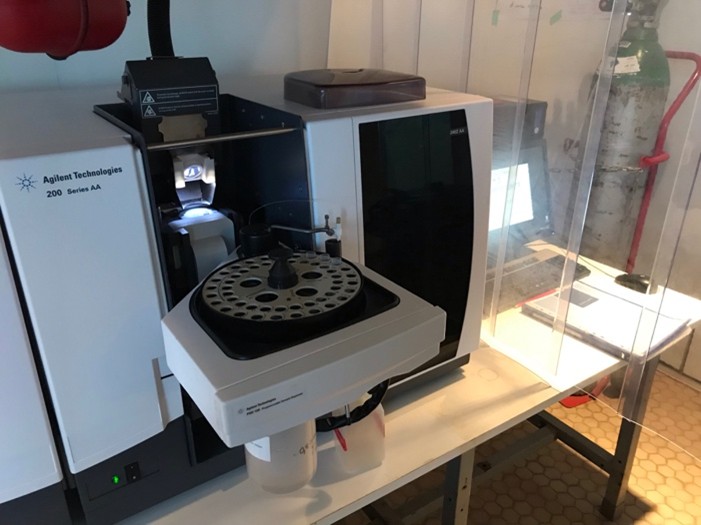
- Atomic absorption spectrometers
– Atomic absorption spectrometer with graphite furnace
– Mercury analysers (N=3)
Contact: Émilie Dassié
Staff involved: Yann Combes
a. ICP-OES (N=2)
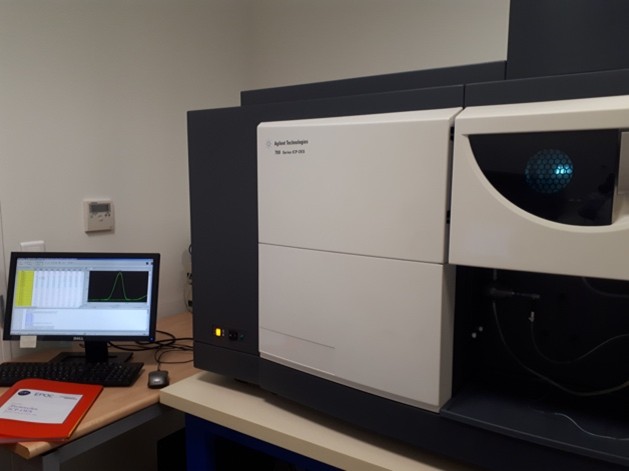
ICP-OES allow the simultaneous determination of major and trace elements in liquid or solid matrices after mineralization.
– ICP-OES #1 (Arcachon Marine Station): Specialized in the analysis of charged matrices (biological tissues, contaminated waters, sediments and soils) and organic matrices (e.g. DMSO).
– ICP-OES #2 (Pessac): Optimized for the study of trace element to major ratios (e.g. Sr/Ca, Mg/Ca, U/Ca…) in carbonate matrices (e.g. microfossils, corals, speleothems).
References: Yann Combes and Émilie Dassié
Staff involved: Thibaut Caley, Magalie Baudrimont
b. Atomic absorption spectrometer oven
The graphite furnace atomic absorption offers an increased sensitivity for the single-element determination of trace elements (e.g. Zn, Cd, Li, Pb, As, Cu, Au, Ni, Ag) in complex and low volume matrices. It also allows contamination monitoring for laboratory experiments and serves as an educational support for teaching activities.
Contact person: Yann Combes
Staff involved: Magalie Baudrimont
c. Elemental mercury analyzer (N=3)
The three mercury analyzers allow quantification of total mercury (Hg) in a wide variety of matrices (water, soil, sediment, food, biological tissues, industrial effluents).
Contact person: Émilie Dassié and Cécile Bossy
Staff involved: Alexia Legeay
Sample Preparation Division
The platform is equipped with small equipment allowing for the preparation of samples prior to analyses. It offers:
– Implementation of analytical processes and or sample preparation: centrifugation, filtration, lyophilisation, UV irradiation, grinding, dissection)
– Mineralizations / Digestions: partial or total extractions, by microwave or on plates
– Leaching (Milli-Q®, seawater, desired matrices)
Staff involved: Cécile Bossy, Alexandra Coynel, Yann Combes, Emilie Dassié, Camille Dutour, Laureline Labadie, Nicolas Layglon, Laurie Payet