GEOL SED
Introducing the team sedimentary geology :
Managers : Corinne Loisy and Sébastien Zaragosi
The general objective of the team is to understand the sedimentary, structural and diagenetic processes at the origin of present and ancient sedimentary systems. It is structured around four axes and two cross-disciplinary actions.
Research areas and themes
AXIS 1: Architecture of sedimentary basins
Coordinators : Carine Grélaud and Philippe Razin
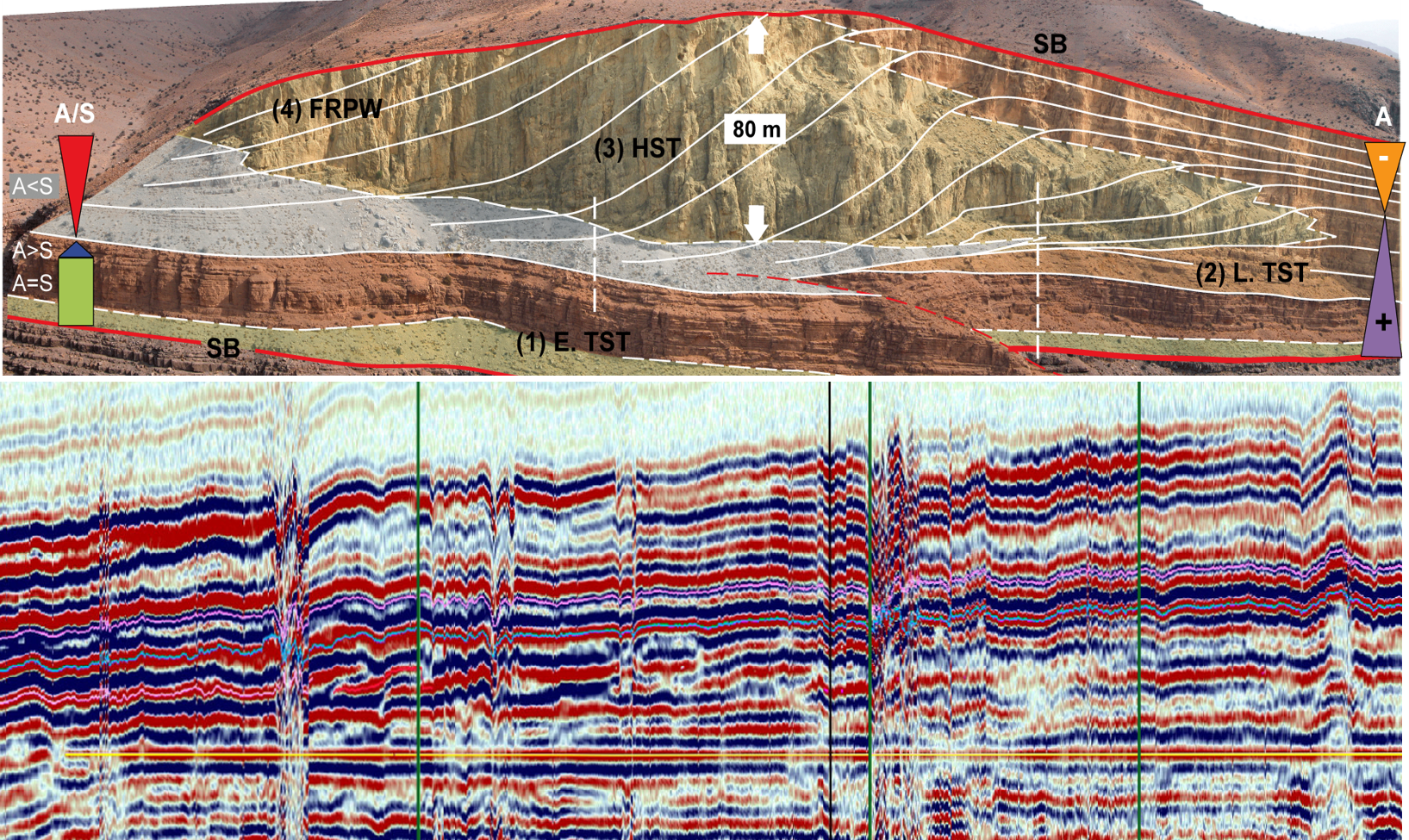
Factors in control of the architecture of deposits in different geodynamic contexts:
- The Meso-Cenozoic Arabian Platform, the Paleozoic North-Gondwana Platform, the Jurassic Atlas Basin, the Cretaceous-Tertiary Pyrenean basins, etc.
- Dynamics of the ‘Apulian/Kruja Platforms – Ionian Basin’ carbonate system in the Upper Cretaceous and Palaeocene (Albania and Northern Greece).
- Tectono-sedimentary architectures of the Upper Carboniferous-Permian basins.
AXIS 2: Reservoirs, Heterogeneities, Geo-fluids, Diagenesis
Coordinators : Thibault Cavailhes and Adrian Cerepi
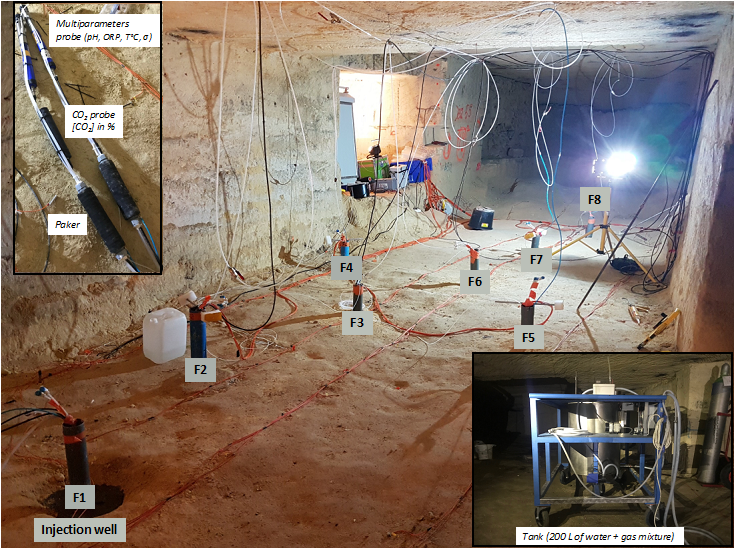
- Behaviour of geofluids in the context of geological storage of CO2 and energy (CH4-H2).
- Characterisation of carbonate and volcaniclastic deposits.
- Characterisation of authigenic carbonates on the outskirts of the Capbreton canyon.
- Impact of micro-organisms on sandstone and carbonate diagenesis.
AXIS 3: Processes and sedimentary environments
Coordinators : Raphaël Bourillot and Emmanuelle Ducassou
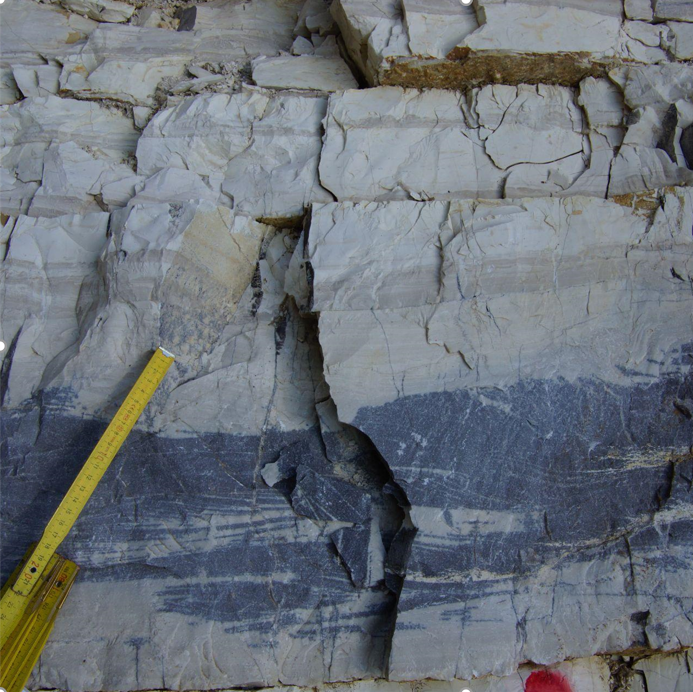
- Study of the physical processes of sedimentation.
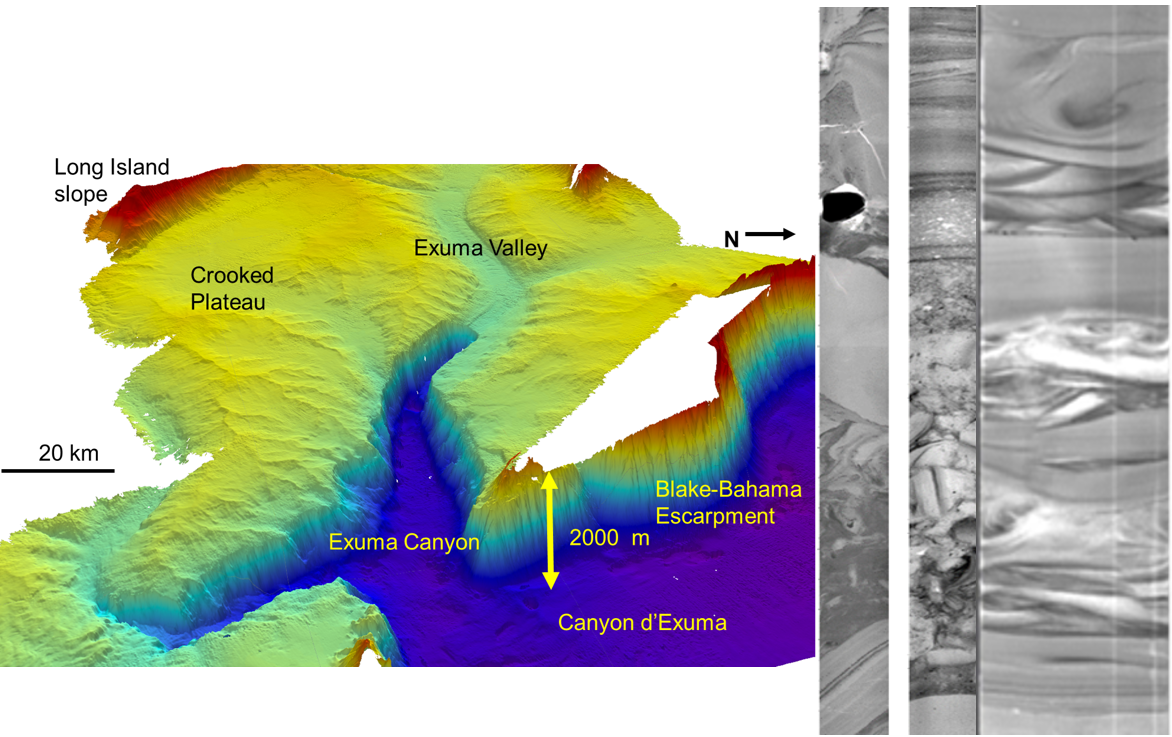
- Characterisation of sedimentation at the continent-ocean interface.
- Study of the role of micro-organisms in sedimentation.
- Dating of sedimentary archives on a multi-decadal scale.
- Current and recent carbonate slope morphologies.
AXIS 4: Geological hazard
Coordinator : Thibault Cavailhes
- Study of seismic hazard through offshore and onshore seismogenic faults: Cycladic backarc (Milos), Karakorum, Haiti, Aquitaine basin.
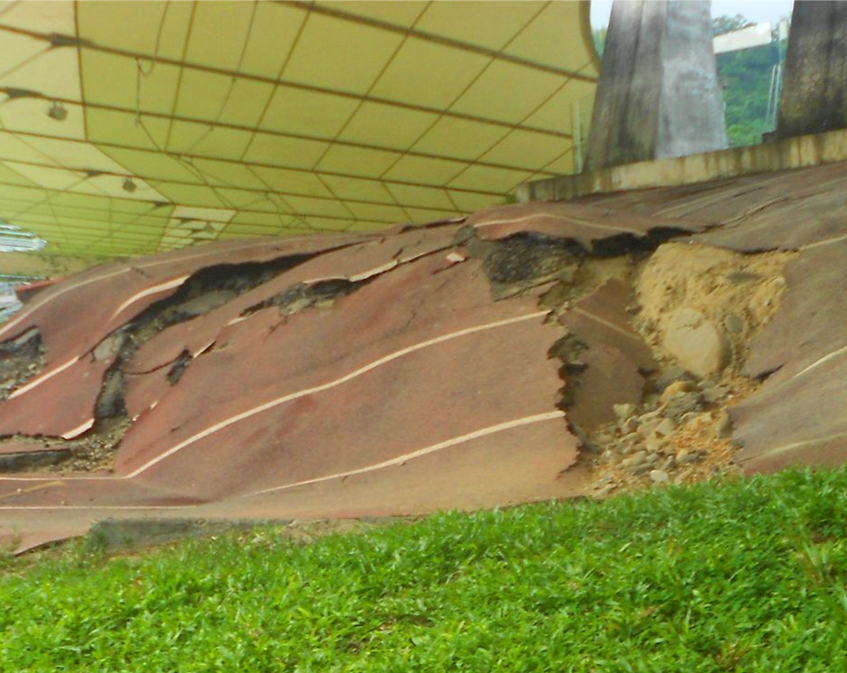
- Study of the gravity hazard through the characterisation of pillars in underground quarries and large-scale ground movements.
- Development and evolution of offshore sinkholes.
Cross-functional actions: Monitoring and databases
Coordinators : Corinne Loisy and Sabine Schmidt
- To share our thoughts, experiences and methodologies relating to instrumental activities, observation and database acquisition for axes 2, 3 and 4.
- Instrumented sites all along the Neo-Aquitaine Land-Sea Continuum support this work, including the MAGEST network, which has been observing the Gironde estuary at high frequency since 2004 (https://magest.oasu.u-bordeaux.fr/).
Cross-functional initiatives: Modelling
Coordinators : Carine Grélaud and Sophie Leleu
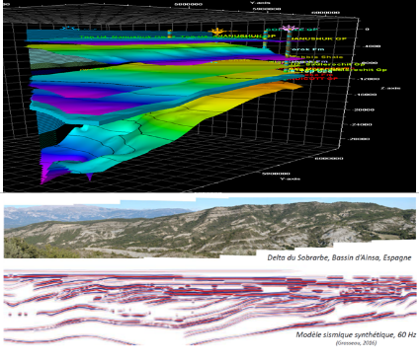
The modelling tool represents an cross-functional initiatives that cuts across the team’s 4 axes. The aim of the modelling carried out by the team or in collaboration with others is to represent the architecture of basins and reservoirs in 2D and 3D in order to correctly understand the geometry of sedimentary bodies and the parameters that control this geometry.
Equipments / Resources
Analysis
- The team’s analytical activities are largely shared within the PACS (Automated Sediment Core Analysis), GraL (Granulometry and lithopreparation) and TRESOR (plaTefoRme d’analyse – Eaux Souterraines, sOls, Roches) platforms.