
Platform Platine
PLATINE is a multi-instrument platform that combines sample preparation and analysis. It provides support and technical expertise to address scientific issues in the qualitative and quantitative analysis of organic micropollutants (traces and ultra-traces), organic matter in the three environmental compartments (water, air, soil) and atmospheric pollutants.
PLATINE is backed by the LPTC team and enables the technical implementation of projects in collaboration with other scientific teams at the EPOC joint research unit, the CDTA transfer unit and external public and private partners. It is also open to regional, national and international communities.
PLATINE specialises in the field of mass spectrometry. It is equipped with state-of-the-art equipment ranging from single quadrupole (MS) and tandem (MS/MS) systems to more complex instruments such as isotope mass spectrometry, high-resolution mass spectrometry, time-of-flight mass spectrometry and proton transfer mass spectrometry (IRMS, HRMS, TOF, QTOF, PTR-TOF-MS) used for the detection and quantification of molecules in target mode, but also for the search and identification of compounds in suspect or unknown mode.
This highly technical platform for environmental physico-chemical characterisation is equipped with a range of instruments covering five areas :
1) Gas chromatography/mass spectrometry couplings
2) Liquid chromatography/mass spectrometry couplings
3) Sample preparation
4) Optical spectroscopy and flow-field-focusing (FFF) fractionation
5) Online measurement instruments for in situ analysis
Platine is certified and is part of the Bordeaux Research Facilities platform federation. It is also associated with the French Geochemical and Experimental Network (RéGEF) through its network of specific GEOF instruments.
Manager

Scientific leader
Hélène Budzinski
Technical manager
Karine Le Menach
Applications / Expertises
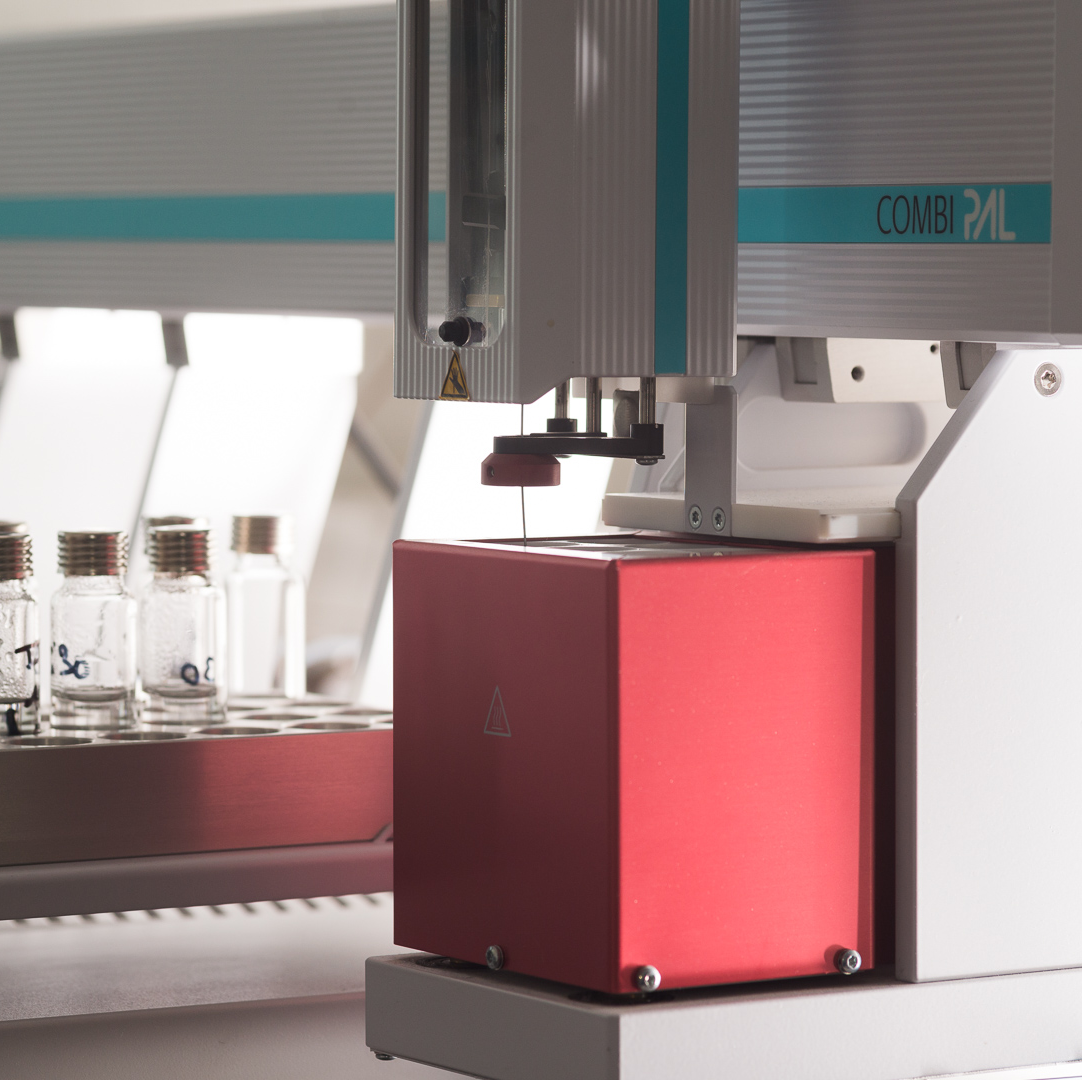
Laboratory coupling Gas chromatography and mass spectrometry (GC/MS)
- Development, optimisation and validation of selective and sensitive analytical procedures for the detection, identification and individual quantification of apolar compounds (e.g. PAHs, PCBs, PBDEs, pesticides, RFAs, phthalates, etc.) present at trace levels in multi-class mixtures of organic contaminants.
- Targeted analysis of compounds identified by GC/MS and GC/MSMS.
- Non-targeted GC/QTOF analyses to research and identify unknown molecules.
- Development of on-line GC/MS-MSMS-HRMS analysis methodologies (e.g. SPME, SBSE-TD, DHS, Pyrolysis, etc.).
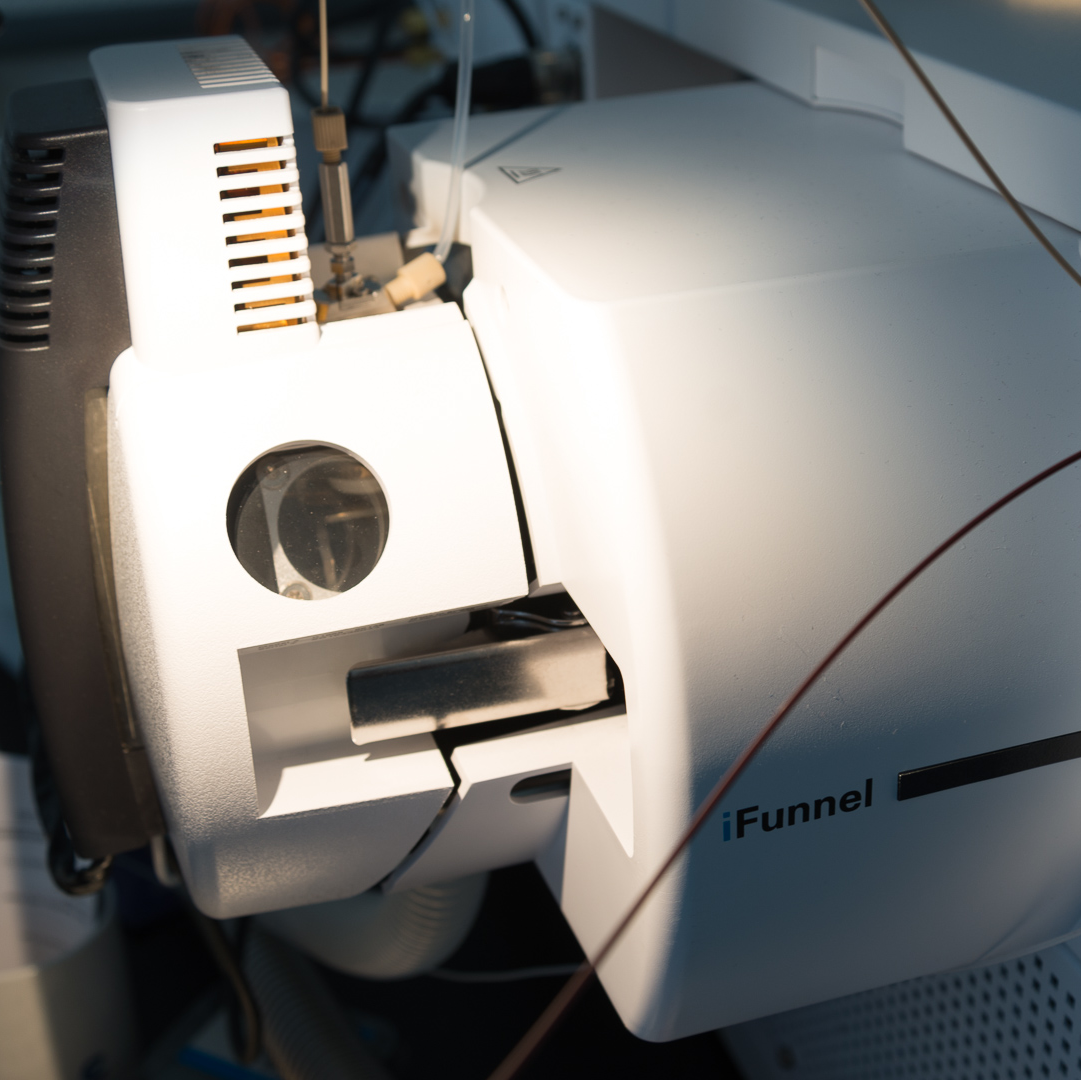
Laboratory coupling Liquid Chromatography/Mass Spectrometry (LC/MS)
- Development, optimisation and validation of selective and sensitive analytical processes for the detection, identification and individual quantification of polar compounds (e.g. PFAS, pesticides, hormones, pharmaceuticals, detergents, alkylphenols, etc.) present at trace level in multi-class mixtures of contaminants.
- Targeted analysis of compounds identified by LC//MSMS. Non-targeted analyses using LC/QTOF and LC/IM-QTOF to search for and identify unknown molecules using xenometabolomics-type approaches.
- Development of on-line analysis methodologies by SPE or direct injection and by LC-2D for the separation of co-eluted compounds (e.g. isomers) and/or those present in complex mixtures.
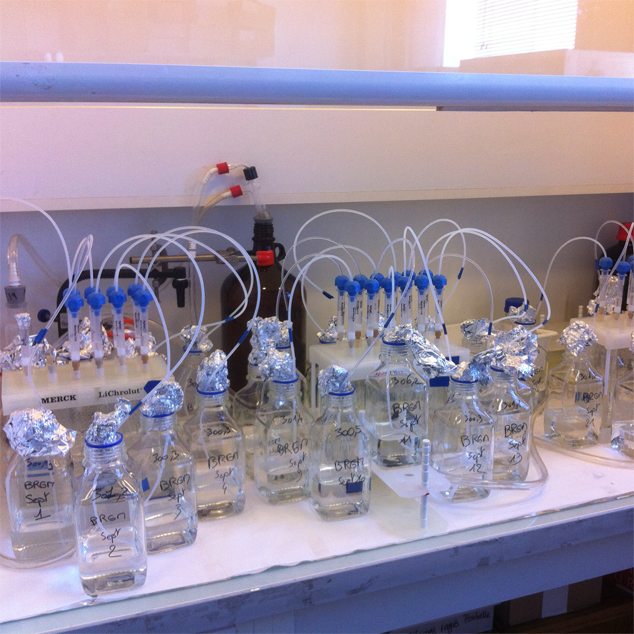
Sample preparation
- Development and validation of sample preparation protocols for the analysis of organic micropollutants in diverse and complex matrices (atmospheric, aqueous, biological, sedimentary, plant, etc.).
- Implementation of analytical processes: sample preparation (filtration, freeze-drying, grinding), extraction and purification to overcome the analytical problems associated with matrix interference, quantification artefacts and false negatives.
- Assays at low levels of presence (pg/L, pg/g) with strict quality controĺ to meet the analytical challenges associated with problems of false positives and cross-contamination.
Optical spectroscopy and force-flow fractionation (FFF)
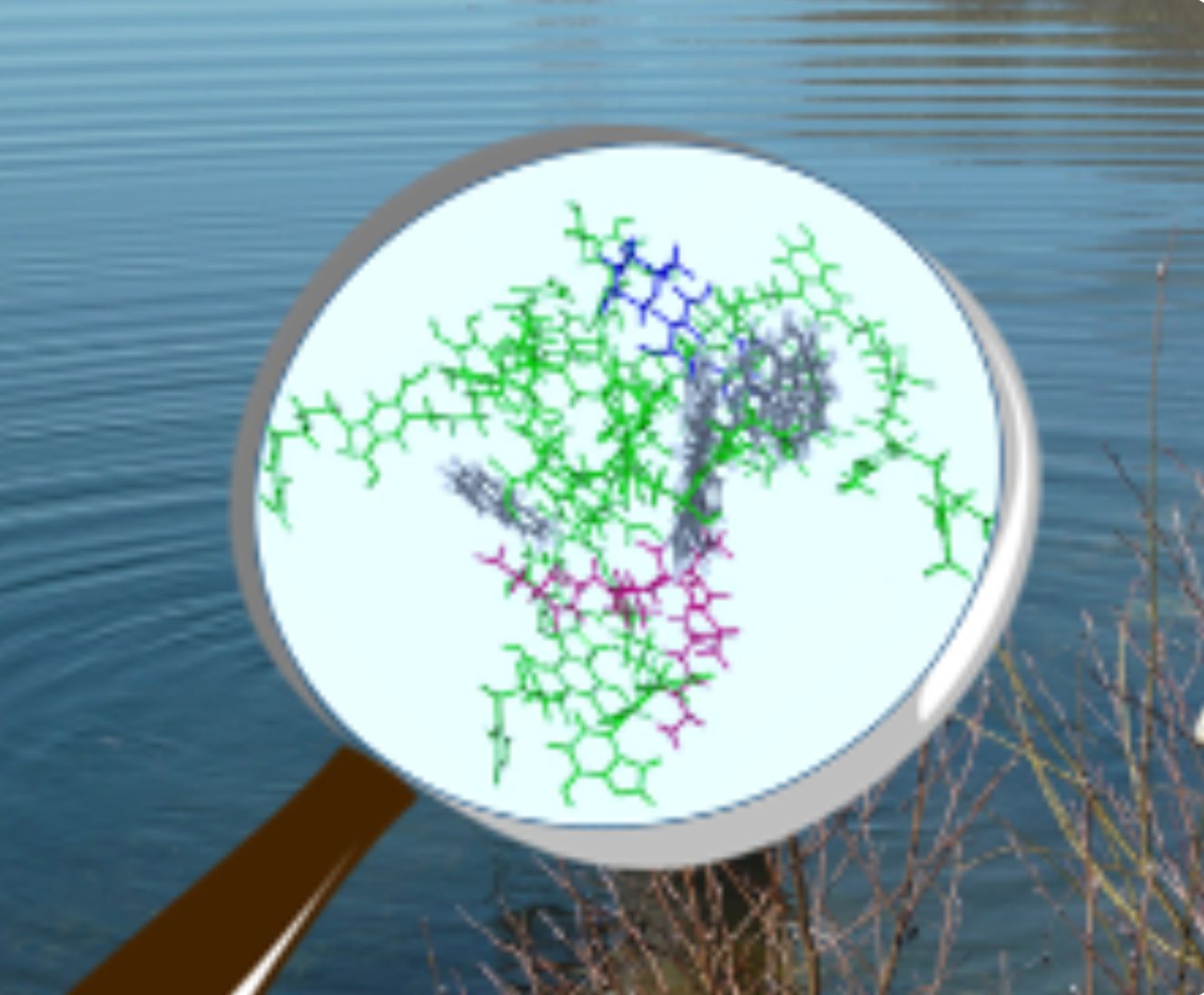
- Characterisation of the optical properties (3D-EEM fluorescence and absorbance) of dissolved/colloidal organic matter (DOM) in different environmental compartments.
- Optimisation of methodologies for carrying out measurements at low concentration levels or high salinities. Separation and/or concentration of DOM constituents using chromatographic and/or membrane techniques (e.g. ultrafiltration, nanofiltration, reverse osmosis, electrodialysis).
- Separation of constituents in the nano to micrometric range thanks to methodological developments carried out with a flow/force coupling fractionation system (AF4).
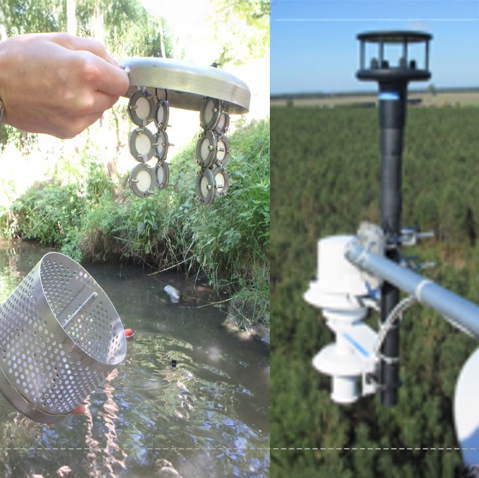
Instrumentation for on-line measurements and in situ analyses
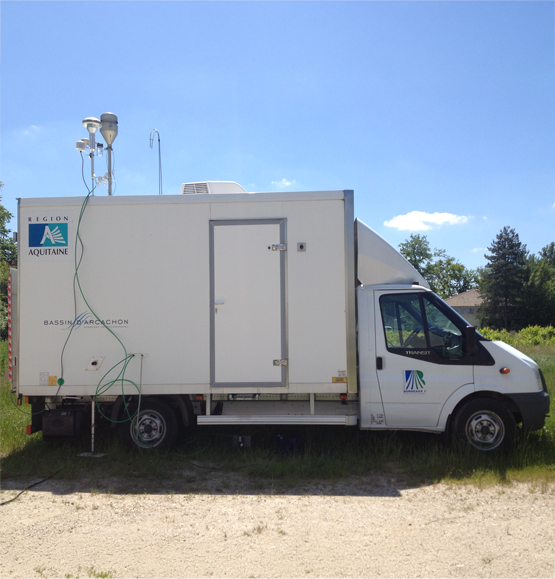
- Carrying out on-line measurements and in situ analyses in atmospheric environments with a mobile laboratory truck and passive sampling campaigns in aquatic environments (e.g. POCIS, Chemcatcher, silicone, SPMD…) for the analysis of organic micropollutants (e.g. pesticides, pharmaceuticals, alkylphenols…): the laboratory travels to the field.
- Analysis of organic pollutants present in the atmosphere (e.g. VOCs, oxidants, terpenes, pesticides, PAHs, etc.) to characterise and quantify them in the gaseous and particulate phases.
- Design of gaseous or particulate sampling systems adapted to the specific characteristics of the environments surveyed and to the analysis of atmospheric samples (active and passive atmospheric samplers).
Instruments
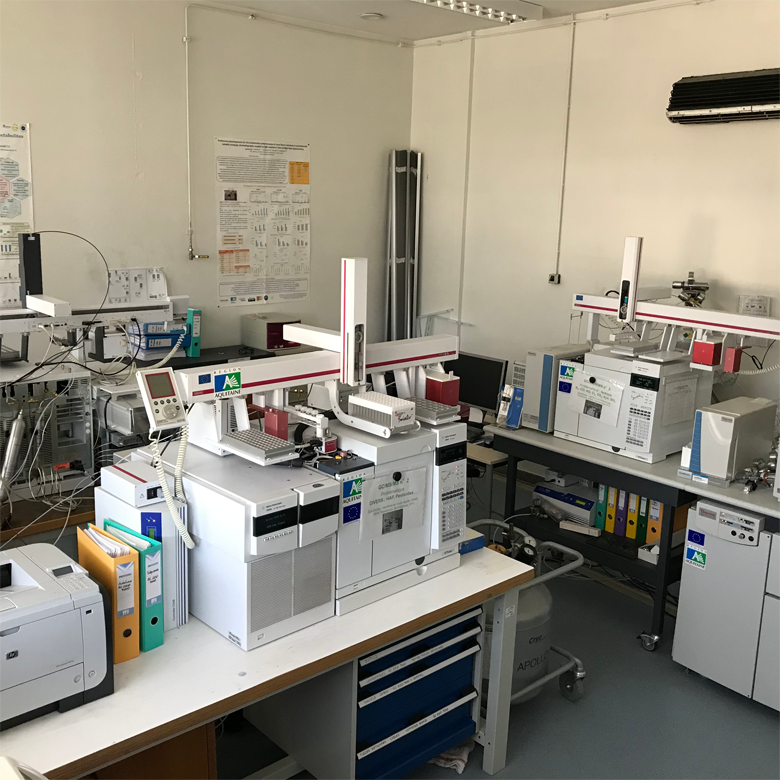
Analytical park of chromatography in gaseous phase and mass spectrometry
- GC/MS coupling (single quadrupole mass spectrometry).
- GC/MSMS coupling (triple quadrupole mass spectrometry).
- GC/QTOF coupling (hybrid quadrupole time-of-flight mass spectrometry).
- GC/EA/IRMS (isotope ratio mass spectrometry) coupling.
- GC/ECD/FID coupling (electron capture and flame ionisation detector).
- On-line analysis modules: LIQ, SPME, SBSE, HS, DHS, Pyrolysis.
- Ionisation sources: electron ionisation (EI) and chemical ionisation (NCI, PCI).
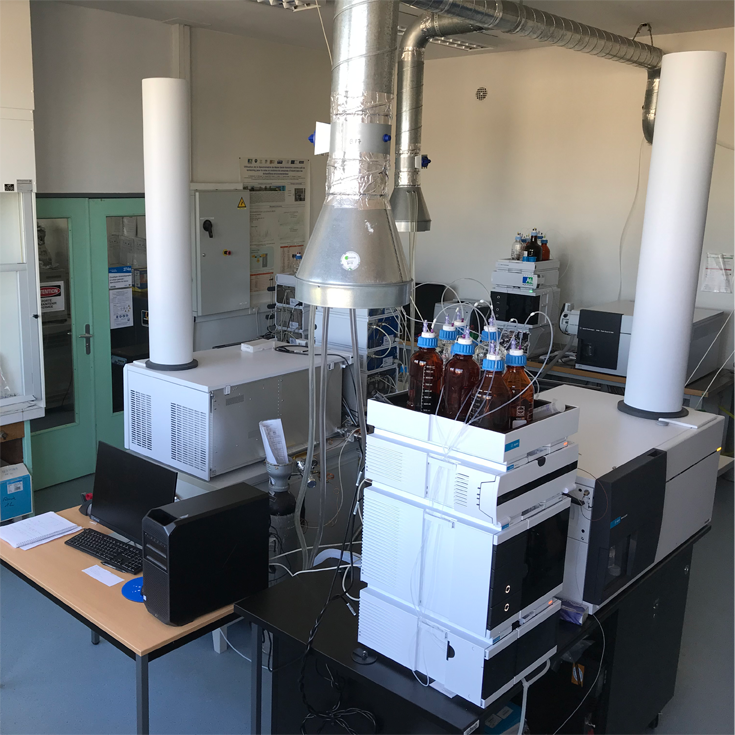
Analytical park of chromatography in liquid phase and mass spectrometry
- LC/MSMS coupling (triple quadrupole mass spectrometry).
- LC/QTOF coupling (hybrid quadrupole and time-of-flight mass spectrometry).
- LC/IM-QTOF coupling (time-of-flight and ion mobility mass spectrometry).
- On-line analysis modules: SPE, LC-2D.
- Ionisation sources: electrospray (ESI), atmospheric pressure chemical ionisation (APCI).
Analytical park for sample preparation
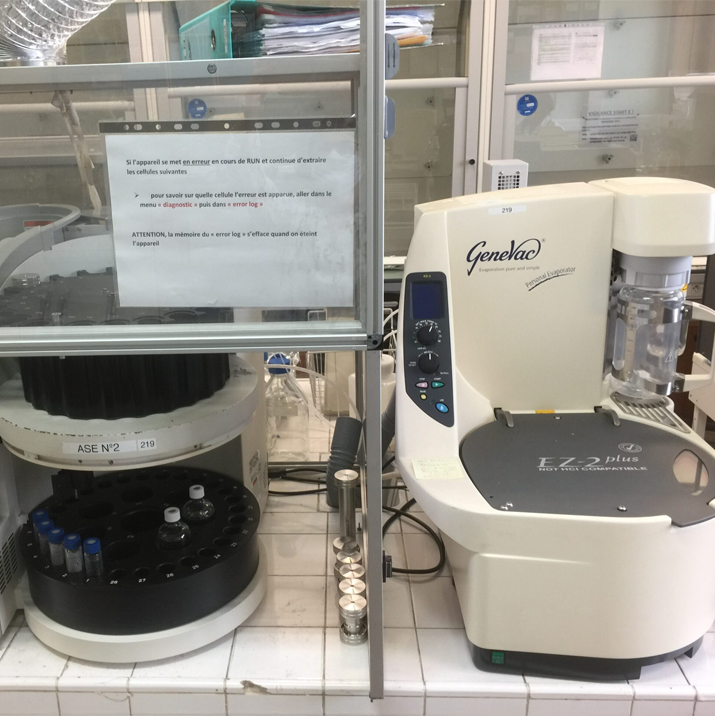
- Technique de lyophilisation, de tamisage et de broyage (billes, couteaux, cryogénique, planétaire).
- Technique d’extraction matrices solides (ASE, MAE, EDGE, EXTREVA).
- Technique d’extraction matrices liquides (SPE manuelle, automatisée et grand volume).
- Technique de concentration (Rapidvap, Speedvac, Genevac, flux gaz).
- Technique de centrifugation (paillasse, gros volume, ultra-centri, mobiles).
- Technique séparative HPLC (semi préparative HPLC/UV et HPLC/DAD/ELSD).
Analytical park for optical spectroscopy and fractionation by flux/force coupling
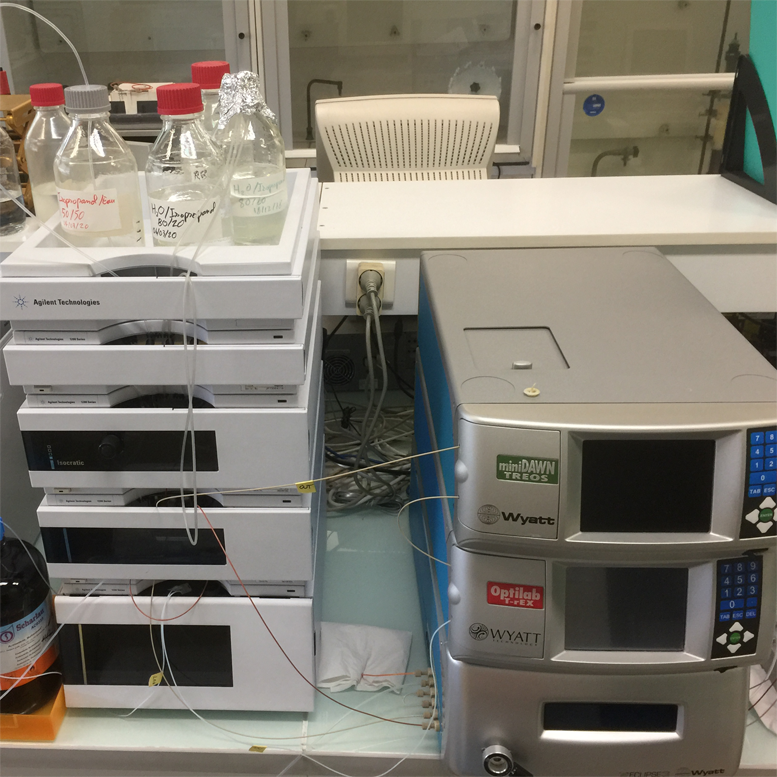
- 3D-EEM fluorescence spectroscopy and UV-Visible absorption spectrophotometry.
- Coupled flow/force fractionation with asymmetric flow (AF4/UV/MALLS/RI).
- Chromatographic and membrane separative techniques (electrodialysis pilot, reverse osmosis pilot and nanofiltration, ultrafiltration units, HPLC/UV and HPLC/DAD/Fluorescence).
Analytical park of on-line instruments and in situ analyses
- Mobile laboratory truck (meteorological station, ozone and NOx atmospheric analysers, particle counter and particle size analyser CPC/DMA-SMPS, TEOM-FDMS ).
- Coupling for on-line VOC analysis (GC/FID and PTR-TOF-MS).
- Air sampling techniques in the gaseous and particulate phase (active and passive) and on-line at low and high flow rates.
- Water sampling technology (automatic collectors for surface and rainwater and passive sampling systems for water bodies (surface and groundwater)).
Personnel involved
The staff members of the PLATINE platform are scientific and technical managers as well as technical staff associated with the platform’s five instrumental areas. Other staff are involved in carrying out projects: researchers, LPTC team research lecturers, and technical staff on permanent or fixed-term contracts.