
Introducing the team Physico- et Toxico-Chimie de l’environnement:
Manager : Pierre Labadie
The LPTC team’s research focuses on organic compounds (e.g. contaminants, pollutants and natural molecules), considered on a molecular scale, and organic matter, considered on a more global scale. This involves studying, in the laboratory or in situ, the presence, transport, inter-compartment transfers, biotic and abiotic transformation processes, bioaccumulation, biomagnification and impact of these entities in different ecosystems. Our activities are directly linked to major societal concerns and are part of national and international research priorities in environmental sciences. They are structured around three complementary research areas that enable us to address these issues in an interdisciplinary context:
1) Transfers ;
2) Reactivity;
3) Interactions and impacts.
Research areas and themes
AXIS 1: Transfers
Coordinators : M.-H. Dévier et P.Labadie
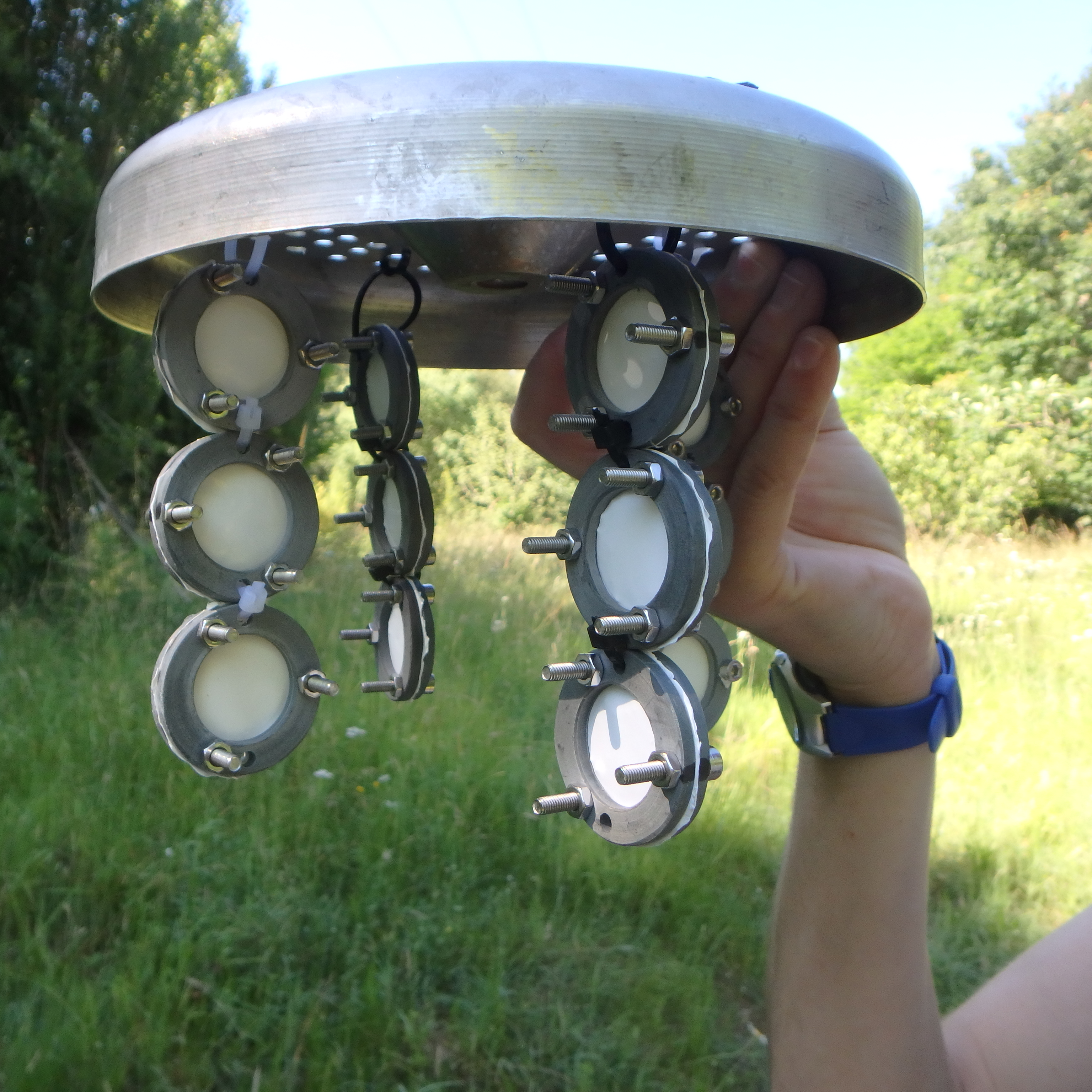
This area aims to develop new analytical tools and to study the sources and dynamics of organic micropollutants and organic matter in the various environmental compartments of the critical zone and the coastal environment, in order to gain a better understanding of their presence and fate. Transfers are considered here on different temporal and spacial scales, under conditions of varying complexity from the laboratory to the field.
AXIS 2: Reactivity
Coordinators : E.Perraudin et A.Trivella
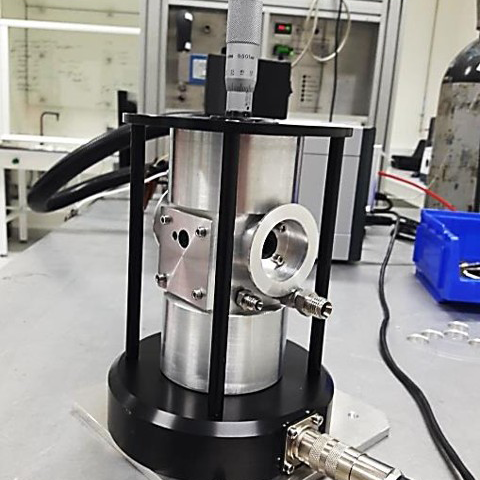
Numerous micropollutants, organic compounds or constituents of organic matter undergo changes in their chemical structure during reaction processes that take place in natural environments or during optimised processes. Here we aim to study the (photo-)chemical reactivity of these organic species and identify their transformation products at the global and molecular level, which represents a major challenge for understanding their fate and impact.
AXIS 3: Interactions and impacts
Coordinators : E.Barron et L.Tuduri
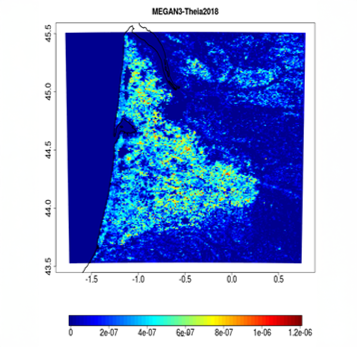
This area aim to address questions regarding to the environmental and health impacts of the compounds considered in areas 1 and 2. This work is also driven by strong societal concerns, in relation to global change and the ‘One Health’ concept. Our objective is to study the interactions between human activities, natural processes and climate change, and to make progress in understanding their combined impacts.
Equipements / Ressources
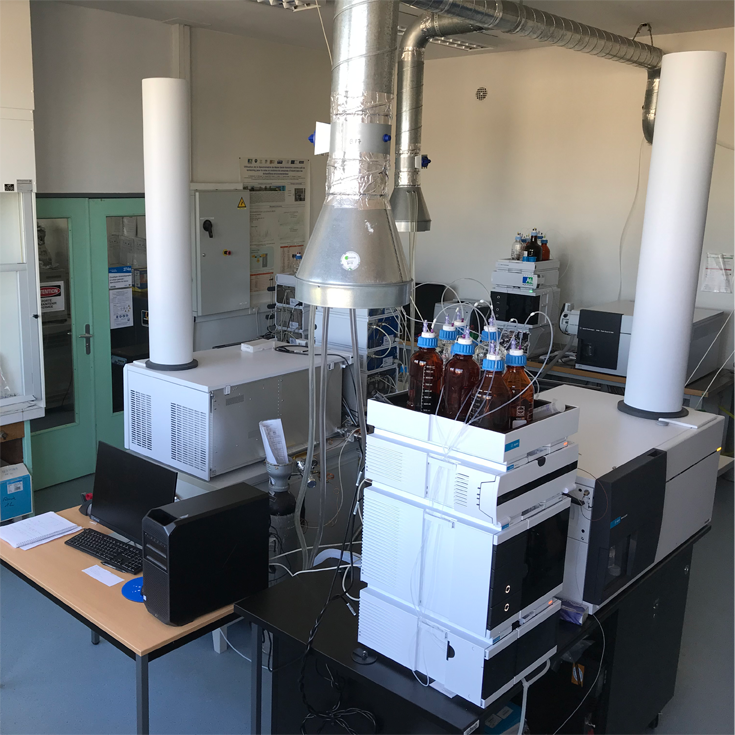
PLATINE platform
The environmental organic analytical chemistry platform, PLATINE, is part of the LPTC team. It is a multi-instrument platform, combining sample preparation and analysis. It provides support and technical expertise for carrying out both qualitative and quantitative analyses of organic micropollutants (traces and ultra-traces), organic matter in various environmental compartments (e.q. water, air, soil) and atmospheric pollutants.