
Platform PACS
Analysis of sediment cores
The PACS platform is dedicated to the high resolution, continuous and non-destructive physical and geochemical (major and trace elements) characterisation of sedimentary records.
It is supported by 2 UMR EPOC teams, the Paleoclimates team and the Sedimentary Geology team. It is accredited nationally by the CNRS REGEF network (‘spectroscopy and X-ray imaging’) and is networked with all French laboratories capable of carrying out elemental analysis by XRF core-scanner and X-ray imaging.

Managers


Scientific leader
Emmanuelle Ducassou
Philippe Martinez

Technical manager
Isabelle Billy
Applications / Expertises
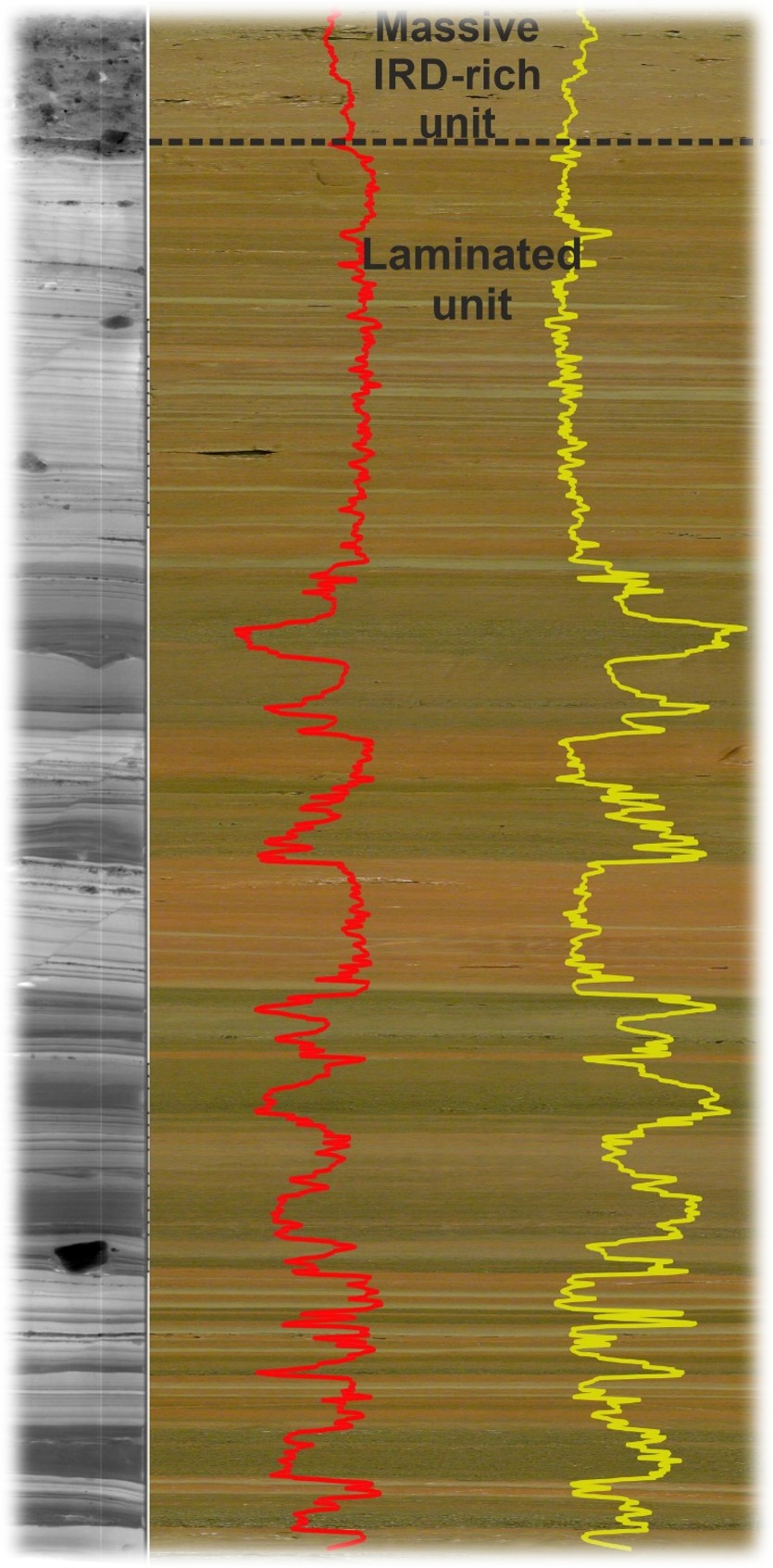
Palaeoclimatology, palaeoceanography, biogeochemistry, sedimentology
Determining the evolution of the chemical composition of sedimentary archives gives access to the study of:
- the mechanisms of climatic variability and their implications for changes in the environment;
- biogeochemical (e.g. diagenetic) processes affecting sedimentary series;
- the transfer of elements (including pollutants) from terrestrial to aquatic environments and their post-depositional (chemical) transformations.
Sedimentology and sedimentary processes
- Characterisation of the erosive, transport and depositional mechanisms responsible for the formation of sedimentary structures.
Instruments
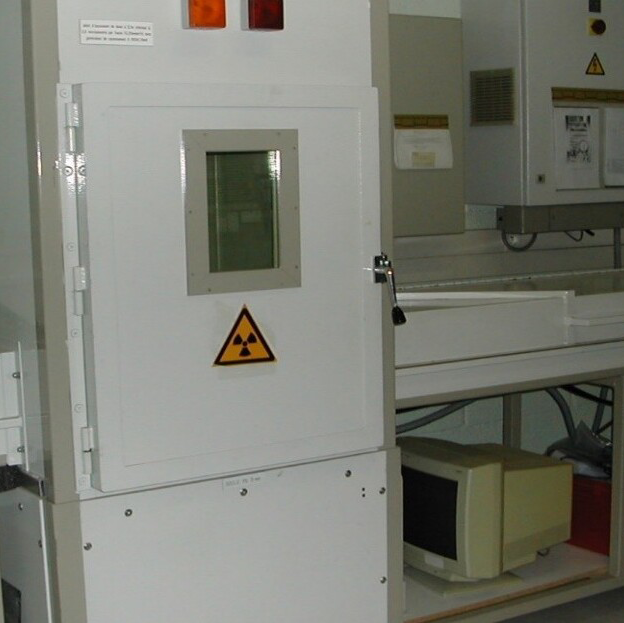
SCOPIX imaging system
- X-ray fluoroscopic images of sedimentary structures.
- Characterisation of depositional processes.
- Bioturbation.
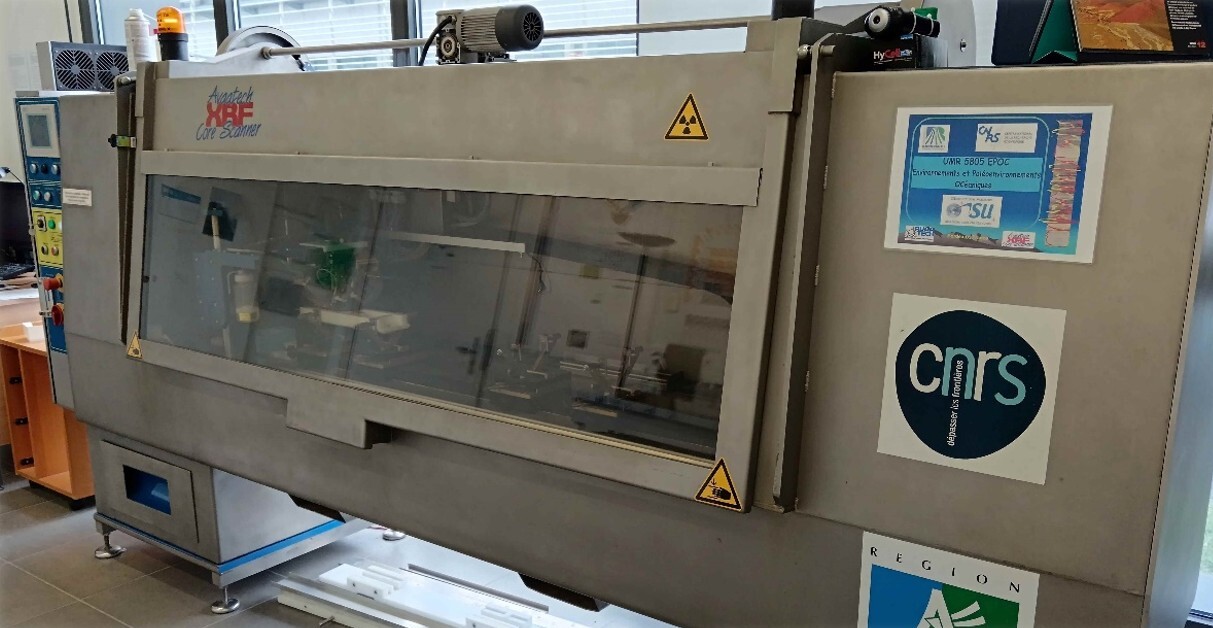
Core scanner AVAATECH
- Chemical characterisation by X-ray fluorescence.
- Elements: from Mg.
- Resolution: cm to sub-mm scale, up to 200 mm.
- SIAME sediment core cutting bench.
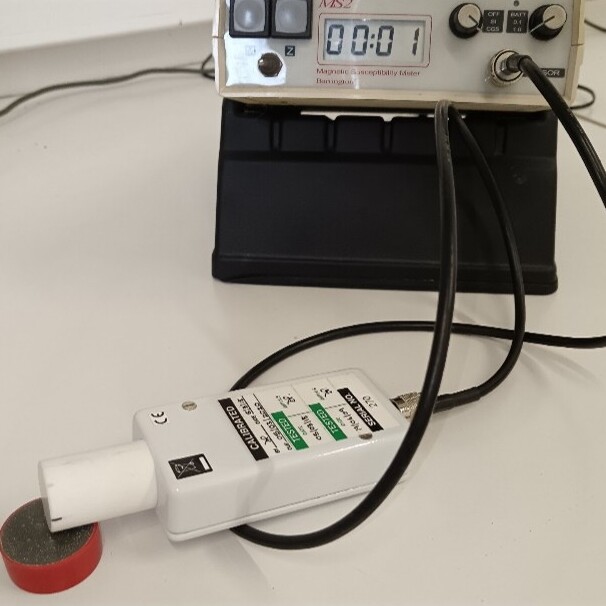
- Bartington MS2e magnetic susceptibility measurement.
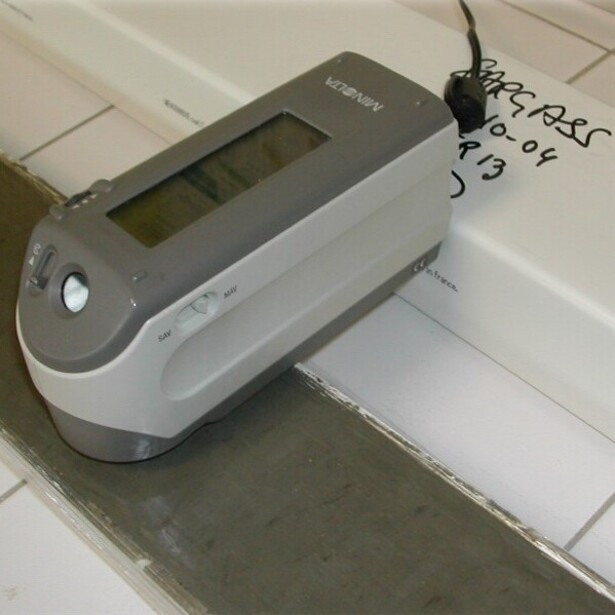
- Minolta Cm2600d spectrocolorimetry.
- Kappabridge measurement of the anisotropy of magnetic susceptibility (AMS)